Sean Paul is the richest dancehall artist in the world as of November 2026, with a net worth we estimate at about $25 million from more than 25 million records sold and two decades of pop crossover hits. This list ranks dancehall deejays and singers, from Jamaica and beyond, whose careers rest mainly on dancehall, active or veteran. We found credible money figures for eight of them, so this is a top eight rather than a padded top ten.
Dancehall has given the world some of its biggest party records, yet very few of its stars have become rich in the way rappers or pop singers do. Most income comes from live shows, and the genre’s best earners are the ones who crossed into pop radio or signed with major American labels. Published estimates for many artists are guesses copied between websites, so we built our own figures and left out anyone whose numbers we could not support.
| Rank | Name | Net worth (USD) | Main source of wealth |
|---|---|---|---|
| 8 | Shabba Ranks | $2 million | Catalogue, live shows |
| 7 | Bounty Killer | $3 million | Live shows, features |
| 6 | Beenie Man | $4 million | Live shows, catalogue |
| 5 | Spice | $5 million | Music, reality TV |
| 4 | Shenseea | $6 million | Interscope deal, endorsements |
| 3 | Shatta Wale | $7.5 million | Shows, music, endorsements in Ghana |
| 2 | Shaggy | $16 million | Record sales, touring, ads |
| 1 | Sean Paul | $25 million | Record sales, streaming, features |
The richest dancehall artists, from 8 to 1
8. Shabba Ranks: $2 million
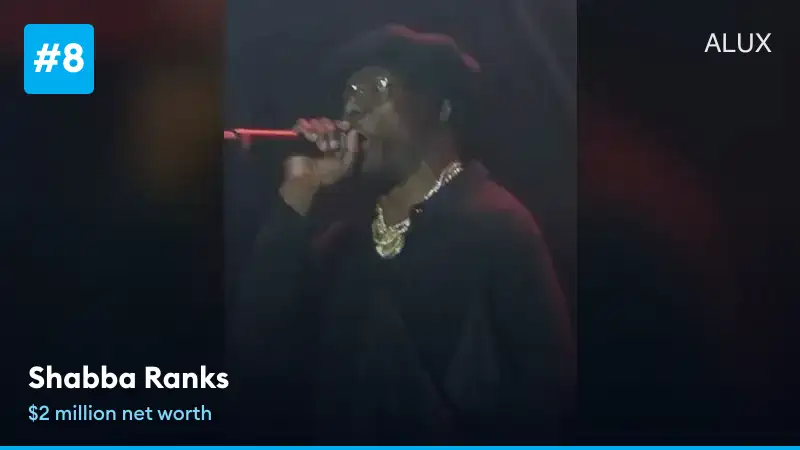
Before Sean Paul or Shaggy, there was Shabba. Rexton Gordon signed with Epic Records at the start of the 1990s, one of the first dancehall deejays backed by an American major label, and he became the first dancehall artist to win a Grammy. Then he won another one the following year, for As Raw as Ever and X-tra Naked.
“Mr. Loverman” was his biggest crossover hit, and his duets with Maxi Priest and KRS-One brought dancehall into American clubs. His hit-making peak was short, but he still headlines nostalgia shows in Jamaica, the UK and the US, and Jamaica gave him its Order of Distinction in 2016.
Estimates for Shabba run from $1 million to $8 million. Royalty income from early-1990s recordings is modest, and he has released little new music since, so we lean toward the low end at about $2 million.
7. Bounty Killer: $3 million
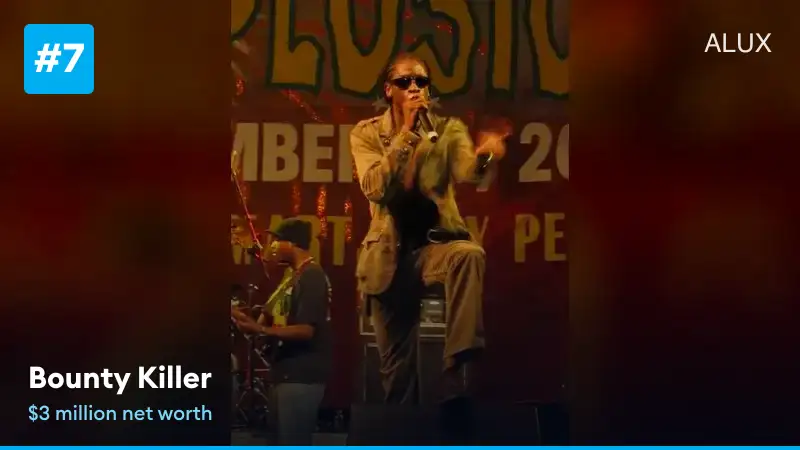
Rodney Price calls himself the Warlord, and for three decades he has been one of the hardest-working deejays in Jamaica. His biggest payday outside dancehall came in 2001, when he featured on No Doubt’s “Hey Baby,” a worldwide hit that won a Grammy.
His real influence is as a talent spotter. His Alliance crew launched a generation of younger stars, and his rivalry with Beenie Man is the most famous in the genre. In 2020 the two faced off in an online sound clash that drew millions of live viewers and reminded the world how good both of them still are.
Bounty Killer earns mostly from live bookings and features. We value his catalogue and property in Jamaica and land at about $3 million.
6. Beenie Man: $4 million
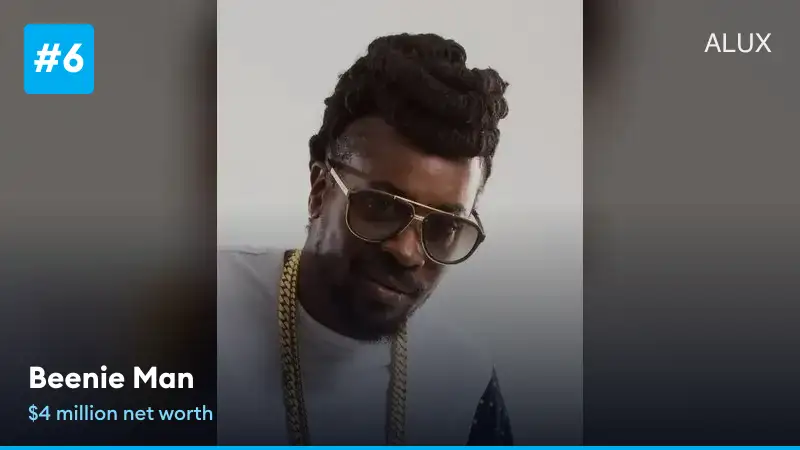
Moses Davis recorded his first album as a child in 1983 and has never really stopped. Beenie Man was named DJ of the Year in Jamaica eight years running from 1993, and his album Art and Life won a Grammy for Best Reggae Album in 2001.
“Who Am I” and “Dude” made him a regular on American radio around the turn of the century, and a long string of number one albums on the reggae chart followed. He has also appeared in films, and he remains one of the most in-demand acts on the Caribbean festival circuit.
Dancehall’s self-styled king has a long career, but most of his money goes to running a live show with a band and crew. Our figure, about $4 million, comes from his touring income, catalogue and Kingston property.
5. Spice: $5 million
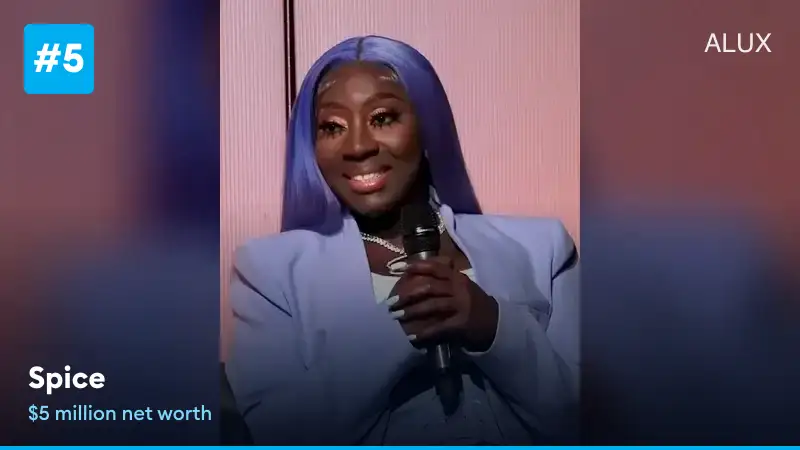
Grace Hamilton grew up in Portmore and became the biggest female deejay of her generation, with hits like “So Mi Like It” and “Romping Shop.” She called herself the Queen of Dancehall long before anyone gave her the title, then earned it.
Television made her a household name in America. She joined the cast of Love & Hip Hop: Atlanta in 2018, which put her in front of millions of viewers who had never been to a Kingston street dance. Her album 10 was nominated for the Grammy for Best Reggae Album, and she still tours heavily in the US, the UK and the Caribbean.
Reality TV fees, live shows and a hit-heavy catalogue put her at about $5 million, a figure that matches the most careful published estimates.
4. Shenseea: $6 million

Chinsea Lee from Mandeville is the youngest artist on this list and the one with the strongest American label backing. She signed with Interscope Records in 2019, and in 2021 she landed a feature on “Pure Souls” from Kanye West’s album Donda, which earned her a share of an Album of the Year Grammy nomination.
Her debut album, Alpha, came out in 2022 and debuted near the top of the reggae chart, and her second album followed in 2024. Brands have queued up, including Pepsi and the Caribbean telecom group FLOW. She moved to the United States in 2020 and bought a home in Los Angeles.
The Interscope advances, sponsorship deals and steady touring add up to about $6 million in our model, with plenty of room to grow if a US crossover single lands.
3. Shatta Wale: $7.5 million
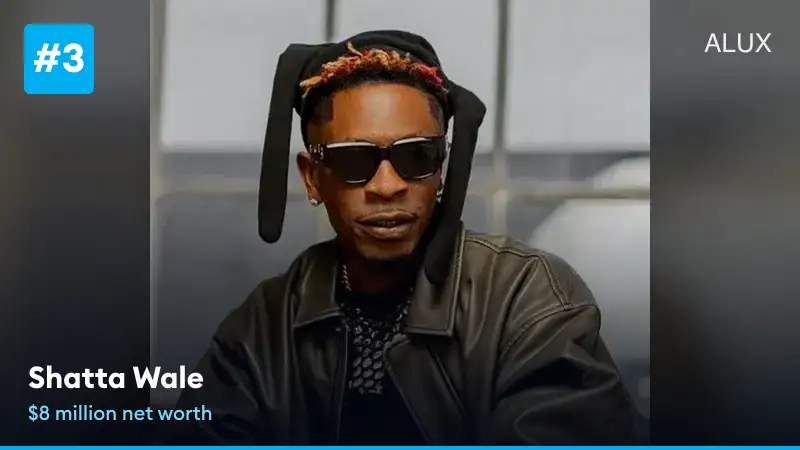
Dancehall is not only Jamaican. In Ghana, Charles Nii Armah Mensah, better known as Shatta Wale, has been the genre’s biggest name for more than a decade, with a fan army called the Shatta Movement that fills stadiums in Accra.
His global break came in 2019, when Beyoncé included his track “Already” on her album The Lion King: The Gift. At home he earns from headline shows, brand ambassador deals and his own label and merchandise, and he releases music at a pace few artists anywhere can match.
He has said he is worth more than $10 million, and Ghanaian reports put him between $10 million and $15 million, but most of those numbers come from him. In January 2026 he said he had sold 300 of his songs for $3 million. We count that money at a discount, add a value for the rest of his catalogue, his label and his Shaxi ride-hailing app, and allow for savings from shows and endorsements. That gives about $7.5 million.
2. Shaggy: $16 million
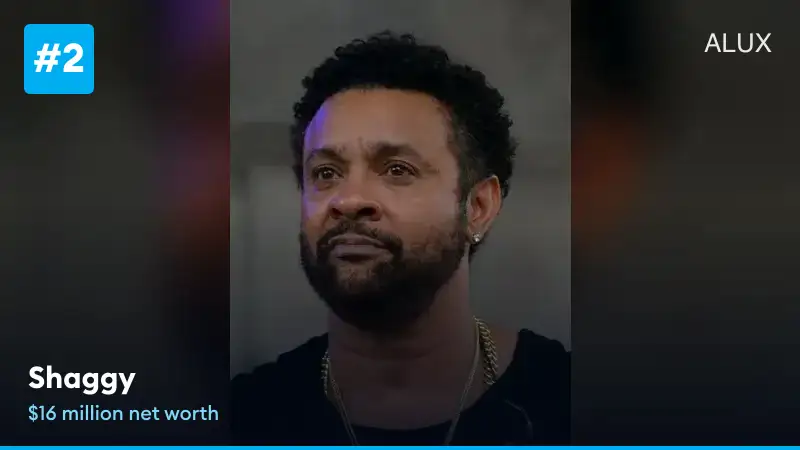
Orville Burrell served in the US Marine Corps before music took over. As Shaggy he scored his first international hit with “Oh Carolina” in 1993 and later won a Grammy for the album Boombastic. Then came Hot Shot in 2000, with “It Wasn’t Me” and “Angel.” It sold millions of copies and became one of the best-selling albums of the year in the US.
He has kept finding new ways to get paid. He won a second Grammy in 2019 for 44/876, an album with Sting, played the crab Sebastian in a live TV version of The Little Mermaid, and starred in a Super Bowl ad for Cheetos built around “It Wasn’t Me.” He also runs his own label and a charity concert that raises money for a children’s hospital in Kingston.
Shaggy bought a home in Coral Gables, Florida, for about $2.2 million in 2021. Album royalties, a steady touring business and those ad deals make up the rest of our estimate of about $16 million, a little above the most careful published figures because he has kept touring since.
1. Sean Paul: $25 million
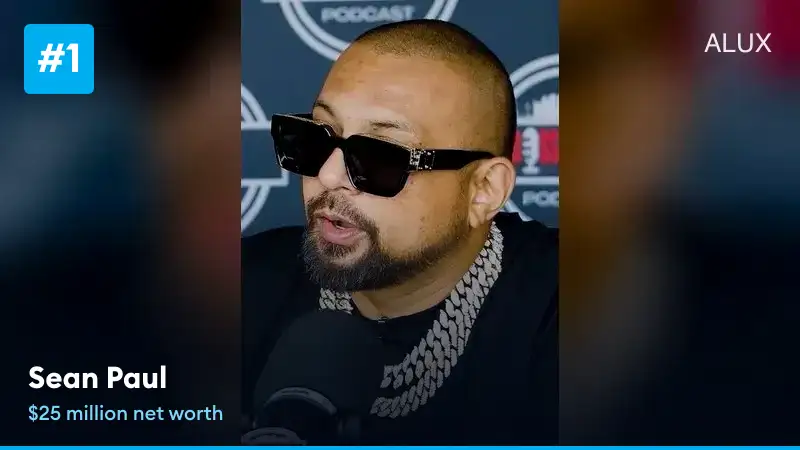
Sean Paul Henriques played water polo for Jamaica as a teenager before he picked up a microphone. His 2002 album Dutty Rock sold more than six million copies, won the Grammy for Best Reggae Album and gave him a US number one with “Get Busy.” He hit the top of the chart again in 2006 with “Temperature.”
What makes Sean Paul different is the second wave. In the 2010s he became pop’s favourite guest star, with features on Sia’s “Cheap Thrills,” Clean Bandit’s “Rockabye,” which spent nine weeks at number one in the UK, and Dua Lipa’s “No Lie.” Those songs have billions of streams, and features keep paying long after the tour ends. Across his career he has sold more than 25 million records.
He also holds part of a merchandising company and lives in a house he built in Kingston. Royalties from two decades of global hits, plus touring and the business stake, put him at about $25 million, the most of any dancehall artist alive.
What the richest dancehall artists have in common
- Crossover is everything. The top two both scored number one hits on American pop radio. Below them, the drop is steep, because a dancehall hit that stays inside the genre pays mostly in show bookings.
- Features pay twice. Sean Paul, Shenseea, Bounty Killer and Shatta Wale all got their biggest exposure as guests on someone else’s record, and features keep earning royalties for years.
- Grammys help, but less than you think. Six of the eight have won or been nominated for a Grammy, yet Shabba Ranks, the first winner, is at the bottom. Awards open doors, and only long-term hits keep the money coming in.
- Television is the new tour. Spice and Shaggy both boosted their earnings through American TV, a route that did not exist for the genre’s first stars.
The habits that let people afford this
Short audio lessons on money, mindset and discipline, in the Alux app.
Get the Alux app →FAQ
Who is the richest dancehall artist in 2026?
Sean Paul is the richest dancehall artist with an estimated net worth of about $25 million, earned through hit albums, pop features and touring.
Is Shaggy richer than Sean Paul?
No. We estimate Shaggy at about $16 million and Sean Paul at about $25 million, mainly because Sean Paul’s pop features keep producing streaming royalties.
Who is the richest female dancehall artist?
Shenseea, with an estimated $6 million, just ahead of Spice at about $5 million.
Why does this list have only eight artists?
We only rank artists whose wealth we can estimate from real evidence. For several popular deejays the published numbers were too inconsistent to use, so we left them out instead of guessing.
How do dancehall artists make money?
Mostly from live shows. Streaming royalties, features on pop records, brand deals and television appearances add to it, and the richest artists are the ones who landed hits outside the genre.
Who is the youngest artist on the list?
Shenseea, born in 1996, is the youngest of the eight.
How we estimate net worth
Our estimates are based on public reporting, company valuations, and deal and earnings figures all compiled in an internal valuation model. They are approximate, and figures change over time as new information emerges.
Keep reading
- How rich people get paid forever, from royalties to rent
- Surprising ways to make money without a traditional job
Last updated: November 2026.