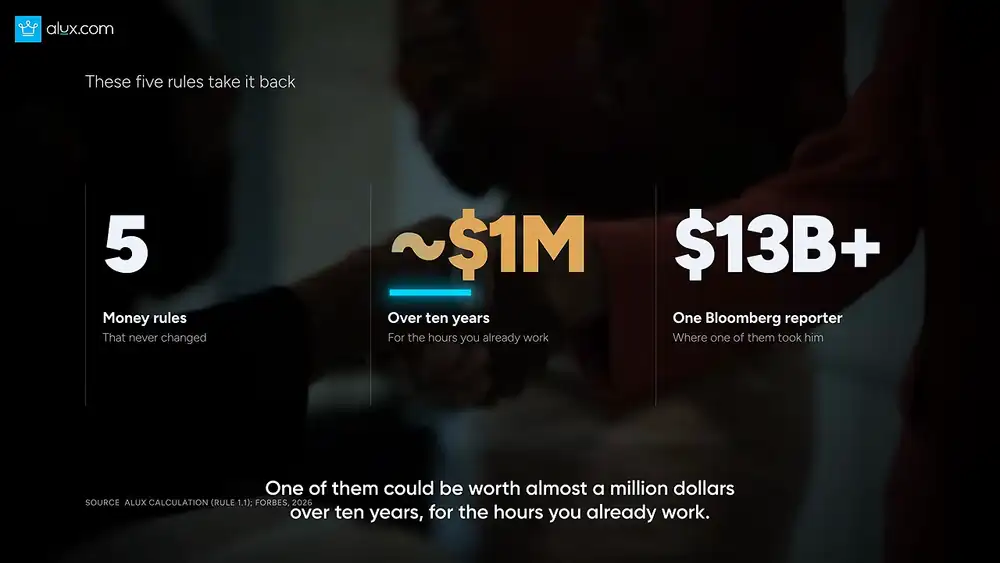
The money rules that never changed are simple: own a piece of what your work builds, let your earnings buy assets that pay for your life, keep cash ready for luck, play defense once you are rich, and stop when more money costs more than it is worth. You are not poor, you are pre-rich. Your next paycheck already has owners, though: the landlord, the car loan and the card you swiped last Friday all get paid before you do. This hour-long video lays out five big rules, each with seven smaller ones, that take that paycheck back.
Below you will find each rule with its key examples and numbers as the video gives them, plus a bonus rule that wealthy families keep in a drawer. It is general education, not personal financial advice.
Watch the full video here, or skip to the breakdown below.
The 5 money rules at a glance
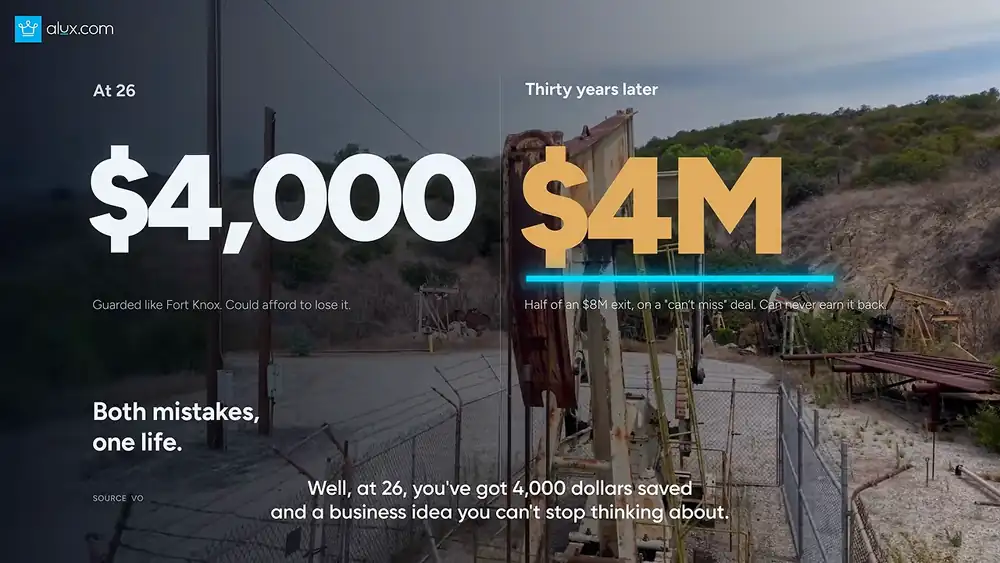
- Own the thing, don’t just work for it (0:27)
- Never spend the money you earn (13:55)
- Luck is a position, not a prize (27:32)
- Getting rich and staying rich are opposite games (42:34)
- Past a point, more money is too expensive (57:36)
- Bonus: Write your rules down before you need them (1:09:36)
1. Own the thing, don’t just work for it
Every family you would call rich got there the same way: somebody stopped renting out their hours and started owning a piece of what those hours built. The goal is to move from labor to capital.
Effort has a ceiling. If sweat paid, the people pouring asphalt in July would be billionaires. A person earning a million a year does not work twenty times harder than you. They point similar hours at a more expensive problem. People who sell technical products to companies earn a median of about 105,000 dollars a year, while the typical sales job pays under 39,000. Invest that 66,000 dollar gap for ten years at around 7% and you have roughly 917,000 dollars.
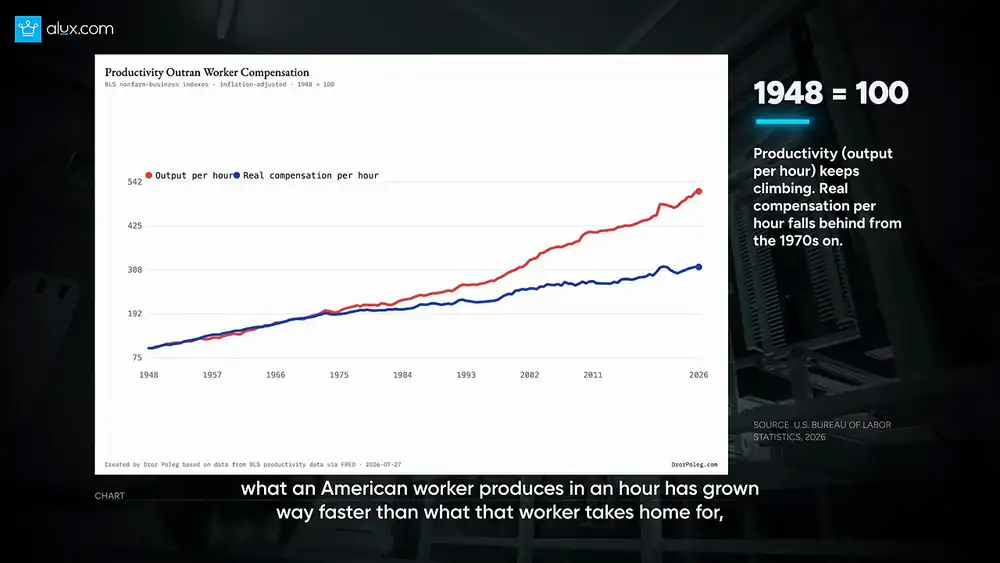
Your paycheck is also a thin slice of what you create. A coffee shop selling 600 drinks a day at six dollars runs over a million dollars a year through a register you might run for 42,000. The owner carries the risk, so he gets the upside. Meanwhile, the share of American business output paid to workers has fallen to 52.8%, the lowest on record.
- Athletes fly on the owner’s jet: the Lakers were bought for 67.5 million dollars in 1979 and sold at a ten billion dollar valuation.
- A slice of a big pie beats all of a small one: Jeff Bezos went from about 42% of Amazon to about 9%, and the smaller slice is worth hundreds of times more.
- Climb the pay ladder: hours, then the job, then knowledge, then results, then ownership. Paid by the hour, your ceiling is 24.
- Own what you make: Taylor Swift reportedly paid around 360 million dollars to buy back her first six albums. Check your offer letter for the word “invention”.
- Buy the business instead of building it: more than 2,100 US small businesses sold in one recent quarter at a median price of 350,000 dollars, and an SBA 7(a) loan can mean putting in about 10%.
One warning on equity: stock in a company that never grows is worth zero. If nobody can tell you the last valuation and how the stock vests, take the salary.
Pick a bigger problem before you pick a harder week.
2. Never spend the money you earn
Rent still comes out of your paycheck. This rule is about what is left after the bills: that money buys machines, and only the machines pay for your life. Right now, for most people, almost nothing is left. Americans owe 1.26 trillion dollars on credit cards, and more than a third of adults could not cover a surprise 400 dollar bill with cash.
The sneakier version of broke borrows your paycheck before it exists. Regulators found the average user of early-pay apps tapped the button 27 times a year, and counting the fee as interest, a typical advance costs about 110% a year. If it says pay later, it is a loan.
Machines are things like a rental, a stake in a business, an index fund or a content library. Put 500 dollars a month into a dividend fund and the first payout is about two dollars. Keep going for ten years at around 7% and it grows to about 83,000 dollars, which at roughly 5% pays about 345 dollars a month you never worked for.
- Buy the rental before the car: a 600 dollar truck lease costs 36,000 dollars over five years, while a small duplex lets a tenant pay down your loan.
- Every upgrade becomes your new floor: about one in six NFL players files for bankruptcy within twelve years of retiring.
- Be the deadbeat your card company hates: 8,000 dollars at about 22% paid at the minimum takes about twenty years and roughly 13,400 dollars of interest.
- The real millionaire rides the lawn mower: Geoffrey Holt, a mobile home park caretaker with no car, left 3.8 million dollars to his town of 4,200 people.
- Borrow against your machines, don’t sell them: in a bank’s ten-year example, the family that borrowed ended up about 600,000 dollars ahead of the one that sold.
Before a big purchase, ask whether you would still buy it if nobody could ever see it. And only borrow a small slice against investments, because a hard market drop can force a sale at the worst moment.
If your salary pays for it, you can’t afford it yet.
3. Luck is a position, not a prize

Good breaks show up for everybody. They pay off for the people standing close enough to grab them, with enough cash to say yes. If a great deal showed up tomorrow, could you say yes by Friday? Fewer than half of Americans could cover three months of bills from savings, and about a quarter have nothing saved at all.
Luck also multiplies whatever you already have. Florida lottery winners who took home 50,000 to 150,000 dollars were just as likely to be bankrupt within five years as small winners. Zero times a jackpot is still zero.
Then widen your luck surface. Every game has a hit rate: if one pitch in twenty says yes and a yes is worth 2,000 dollars, every no is worth 100 dollars. Get on lists too. Investors call it deal flow, and you are on zero lists until you tell ten people exactly what you are hunting for.
- Be in the room when the cake gets cut: Jack Clark left tech reporting for OpenAI in 2016, cofounded Anthropic, and his stake is now estimated at roughly 13 to 14 billion dollars.
- Keep an opportunity fund for the sale: Berkshire Hathaway’s cash hit a record of roughly 397 billion dollars, and 10,000 dollars put into the S&P 500 on March 23, 2020 was about 15,000 by August.
- Get to the shift before the crowd: workers with AI skills earn about 62% more on average than similar workers without them.
- Sell shovels to the gold rush: a data-center electrician apprentice making 43 dollars an hour with overtime clears about 3,000 dollars a week, and in 1848 Sam Brannan sold pans bought for about twenty cents for fifteen dollars.
Keep two piles: one for emergencies and one you only touch when something great goes on sale.
If nobody knows what you want, nobody can send it to you.
4. Getting rich and staying rich are opposite games
In March 2021, Bill Hwang’s private fund held more than 36 billion dollars, almost all in a handful of stocks with borrowed money stacked on top. When the stocks slid, the banks called their loans and about 20 billion dollars vanished in two days. The money mistake is one anyone can make legally: playing the get-rich game with stay-rich money.
Take big risks with small money, then small risks with big money. At 25, losing 3,000 dollars stings for a month. At 60 with 3 million, losing half could end the story, because losses hit harder than gains. Lose 50% and you need 100% to get back to even. Lose 90% and you need 900%.
Concentrate to build, then spread out to keep. More than four in ten US stocks lost 70% from their peak and never came back. Peloton closed at about 167 dollars in January 2021 and now trades around 5, so 2 million dollars of grants became about 60,000.
- Spend the interest, never the principal: Yale targets spending about 5.25% a year. Living on 3.5% of a 3 million dollar pile that earns 7% gives you about 148,000 a year ten years later.
- Never keep it all in one vault: Silicon Valley Bank lost about 81% of its deposits in two days. Federal insurance covers 250,000 dollars per person, per bank, per account type.
- Give family the apples, never the tree: about a third of people who lend to a friend never get it back. Give it or don’t, and pay the bill, not the person.
- Leave your kids enough to do anything, not enough to do nothing: some of the richest families in Florence in 1427 were still above average six centuries later.
- Insure the disaster, not the dent: an umbrella policy adds a million dollars of liability coverage for a few hundred dollars a year.
You only need to get rich once. Don’t make yourself do it twice.
5. Past a point, more money is too expensive
The first four rules build the pile and protect it. This one is about the bill that arrives if you keep going: your time, your health and years you cannot buy back. Live to 85 and you get about 2.7 billion seconds, with no top-ups.
Price everything in hours of your life. Divide last month’s take-home pay by 730, the hours in a month. On 5,000 dollars, one hour of your life sells for about 7 dollars, so a 40,000 dollar truck costs about 5,800 hours.
Money also has no finish line. Millionaires say they would need two to three times what they have to feel perfectly happy, so pick your enough number yourself.
- Retirement is a number you can calculate: you are free when your machines pay you twice what your life costs. An average household spending about 78,500 dollars a year needs about 157,000 a year, or roughly 3.1 million at 5%.
- Past 55 hours, you work for the cardiologist: a 2021 health study linked 55-hour weeks to a 35% higher risk of dying from a stroke, and wartime factory data showed output at 70 hours was barely above output at 56.
- Spend it while you can still feel it: retirees who started with at least half a million had spent only about 12% of it almost twenty years later.
- Count your remaining summers: at 30 you have about 55 left, and parents who are 60 and seen twice a year may get about fifty more visits.
The 917,000 dollars from rule one, at the same 5%, pays about 3,800 dollars a month. Your freedom date depends far more on what you spend than on what you earn.
You retire the day your machines pay you double, whatever the cake says.
Bonus: Write your rules down before you need them
Family offices, endowments and pension funds all keep an investment policy statement: a few boring pages saying what they buy, what they never buy, how much stays in cash and exactly what they do when the market falls 30%.
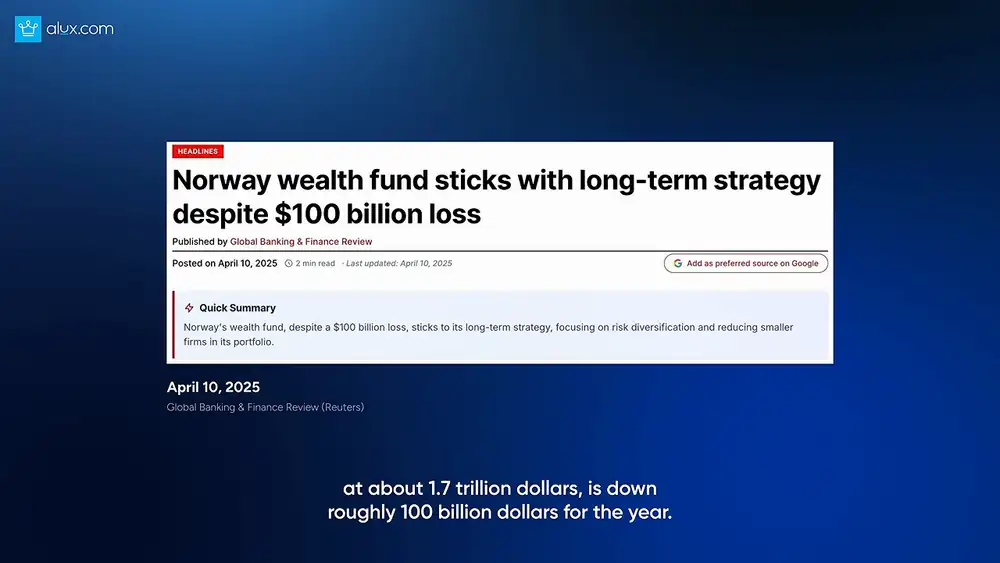
In April 2025, Norway’s oil fund, the biggest sovereign wealth fund in the world at about 1.7 trillion dollars, was down roughly 100 billion dollars for the year. Nobody panicked. The plan was already on paper: stay around 70% in stocks and buy back up if it drops below that.
Yours fits on one page in five lines: you own a piece of what you work on, your earnings buy machines first, you keep cash ready for the sale, you know which game you are playing, and the last line is your enough number. Sign it, date it and tape it inside a door you open every morning.
Write your rules on a calm day.
Rules beat willpower
Each rule hands off to the next. Ownership gives you machines, machines give you cash, cash lets you catch luck, defense keeps what luck brings, and an enough number tells you when to stop trading your summers for more.
Start with one action from this list this week: search your offer letter, call your card company, split your cash across banks or book the trip you keep postponing.
FAQ
What are the 5 money rules that never changed?
Own the thing instead of only working for it, never spend the money you earn, treat luck as a position, remember that getting rich and staying rich are opposite games, and know that past a point more money is too expensive.
What does never spend the money you earn mean?
After the bills, your earnings should buy machines such as rentals, business stakes or index funds, and only the income those machines pay should fund your lifestyle.
How do you calculate your financial freedom number?
Add up what your life really costs each month and multiply it by two. You are free when your assets pay you that amount without you showing up.
Why do the rich borrow against assets instead of selling?
Borrowing avoids a tax bill and keeps the full portfolio compounding. It only works with a small loan, because a hard market drop can force a sale.
How much does a bank insure per person?
Federal deposit insurance covers 250,000 dollars per person, per bank, for each type of account, so large balances should be split across several banks.
Does working more than 55 hours a week pay off?
According to the data in the video, output barely rises past about 48 hours, while 55-hour weeks were linked to a 35% higher risk of dying from a stroke.
Keep reading

- 15 Rules That Make You Rich & Life Easier
- 15 Signs You’ll NEVER Be RICH
- New Money & Old Money: 15 Differences