Félix “xQc” Lengyel, the former Overwatch League pro turned streaming star, is the richest esports player in the world as of November 2026, with a fortune we estimate at about $50 million. Our ranking covers anyone who has competed professionally in esports, signed to a team or playing in top-tier leagues and tournaments, whether they are still competing or now make their money on camera.
Tournament prize money alone makes almost nobody rich. The biggest prize earner in history has banked about $7.2 million in winnings over a decade, while a single streaming contract has paid several times that. So we value total wealth: prize money, salaries, streaming deals, sponsorships, company stakes and property, minus a realistic bite for taxes and spending.
| Rank | Name | Net worth (USD) | Main source of wealth |
|---|---|---|---|
| 10 | Anathan “ana” Pham | $4.8 million | Dota 2 prize money |
| 9 | Kyle “Bugha” Giersdorf | $5 million | Fortnite World Cup win, streaming |
| 8 | Jesse “JerAx” Vainikka | $7 million | Dota 2 prize money |
| 7 | Turner “Tfue” Tenney | $9 million | Fortnite streaming and tournaments |
| 6 | Johan “N0tail” Sundstein | $9 million | Dota 2 prize money, OG co-founder |
| 5 | Matthew “Nadeshot” Haag | $25 million | 100 Thieves founder |
| 4 | Michael “shroud” Grzesiek | $28 million | Streaming, Mixer deal |
| 3 | Lee “Faker” Sang-hyeok | $30 million | T1 salary and equity |
| 2 | Tyler “Ninja” Blevins | $45 million | Streaming, Mixer deal, brand deals |
| 1 | Félix “xQc” Lengyel | $50 million | Kick streaming contract, Twitch |
The 10 richest esports players, ranked
10. Anathan “ana” Pham: $4.8 million

The Australian carry player was a teenager when he joined OG and helped the team win The International in 2018 and again in 2019, the first back-to-back champions in Dota 2’s biggest event. Those two wins came with the biggest prize pools in esports history.
His career prize money is about $6 million, almost all from those two runs. Breaks from competition since then kept his salary income modest compared with the prize haul.
Prize money is the anchor of this number. After a team cut and tax, about $3.3 million of the $6 million was left. A modest salary and a few years of investment growth, minus living costs, bring him to about $4.8 million, and he has not added tournament winnings since 2022.
9. Kyle “Bugha” Giersdorf: $5 million

In July 2019 a 16-year-old from Pennsylvania walked onto the stage at Arthur Ashe Stadium in New York and won the first Fortnite World Cup solo title. The check was $3 million, close to what a US Open singles champion takes home on the same court.
Bugha turned that win into a career. Sentinels signed him, his streams draw a large audience and he still competes. His lifetime prize money sits near $3.8 million, and streaming and sponsorship income have added to it since.
The World Cup prize, after tax, plus several years of streaming and sponsorship money form our estimate. Our older profile of Bugha used a higher number, and we have trimmed it here.
8. Jesse “JerAx” Vainikka: $7 million
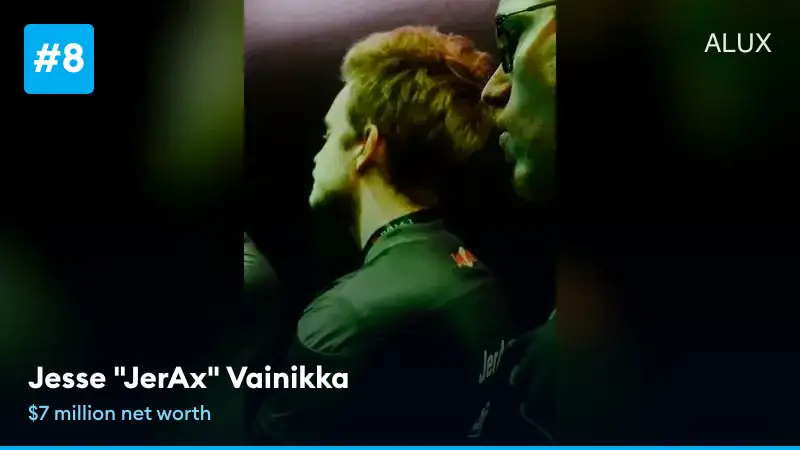
JerAx was the support player behind those same two OG championships. Support players do the thankless work in Dota, buying wards and saving teammates, but the prize split does not care about glory, and he walked away with about $6.5 million in career winnings.
The Finn retired from professional play in 2020, at the top. Retiring early from a game where top players can earn for a decade means his fortune has mostly been growing through investments rather than new paychecks.
We started from his career winnings, took out tax, then added growth on the capital he has had invested since 2020.
7. Turner “Tfue” Tenney: $9 million
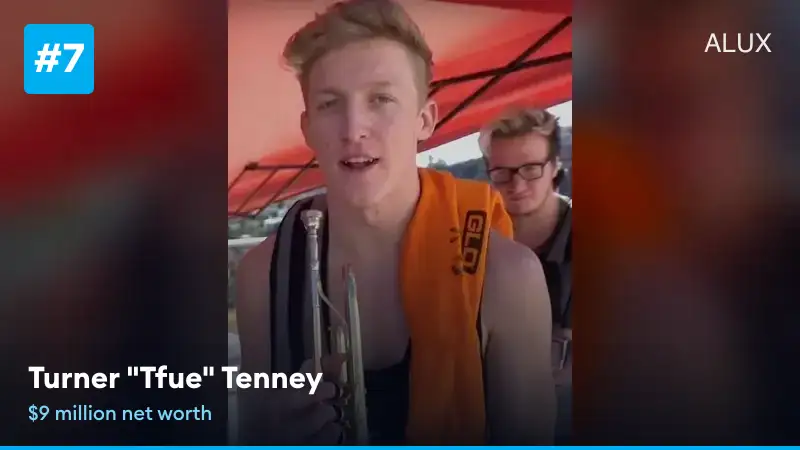
Tfue was one of the best Fortnite players in the world at the game’s 2018 and 2019 peak, competing for FaZe Clan and pulling in millions of viewers on Twitch. He was one of the faces of Fortnite’s competitive scene before he turned more of his attention to streaming and other games.
His streaming income during the Fortnite boom was huge for a player in his early twenties, and he added sponsorships and merchandise. Long breaks from streaming since then slowed the money down.
This figure rests on streaming and sponsorship earnings at his peak, with a deduction for taxes and spending. Published estimates cluster around $9 million to $10 million.
6. Johan “N0tail” Sundstein: $9 million
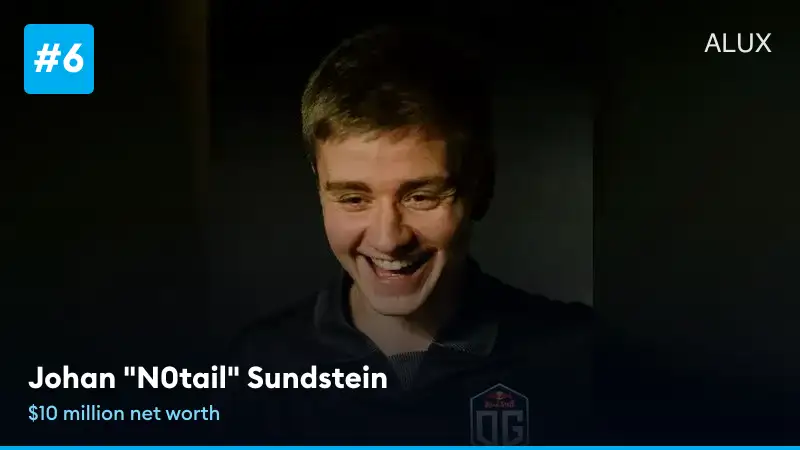
N0tail is the highest-earning player in esports history by prize money, with about $7.2 million in tournament winnings. The Danish player co-founded OG and captained it to both of its International titles.
Being a co-founder gives him something most pros never get: equity in the team that pays him. OG itself has been a tough business: its 2024 staff costs ran far above its revenue, and in September 2025 the club sold a 51% stake at an undisclosed price. He moved away from full-time competition after 2022.
His winnings after tax, team salaries and savings growth, minus living costs, plus a cautious $1 million for his OG stake, make up this number. That puts him level with Tfue at about $9 million, and his prize record is the better documented of the two, so he ranks higher. Outside estimates for N0tail range from about $7 million to $15 million.
5. Matthew “Nadeshot” Haag: $25 million
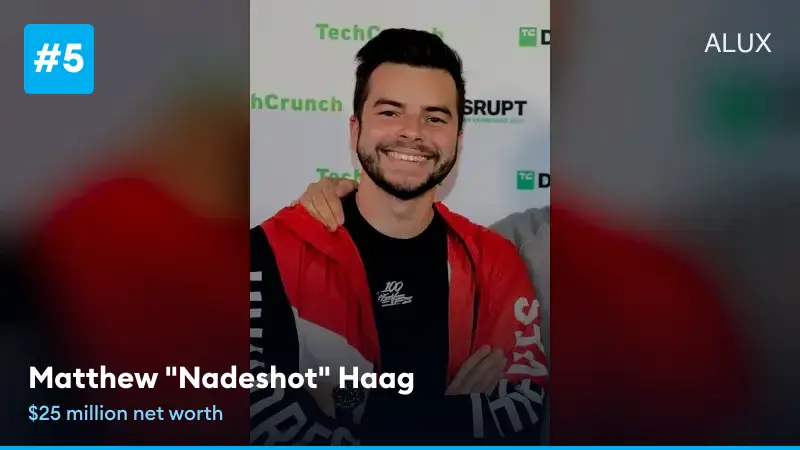
Nadeshot was one of the best Call of Duty players of his era, competing with OpTic Gaming in its prime. He retired from competition in 2015 and founded 100 Thieves two years later, which turned a pro player into the owner of the team.
100 Thieves has fielded teams in League of Legends and Valorant, sells streetwear that regularly sells out and has had backing from big-name investors. In its last major funding round the company was valued at about $460 million, although later reporting suggests the value has since fallen.
The main asset is his stake in 100 Thieves, which we mark down from that peak valuation, plus his streaming income. Our earlier profile of Nadeshot used a higher figure, and we now think it was too optimistic.
4. Michael “shroud” Grzesiek: $28 million
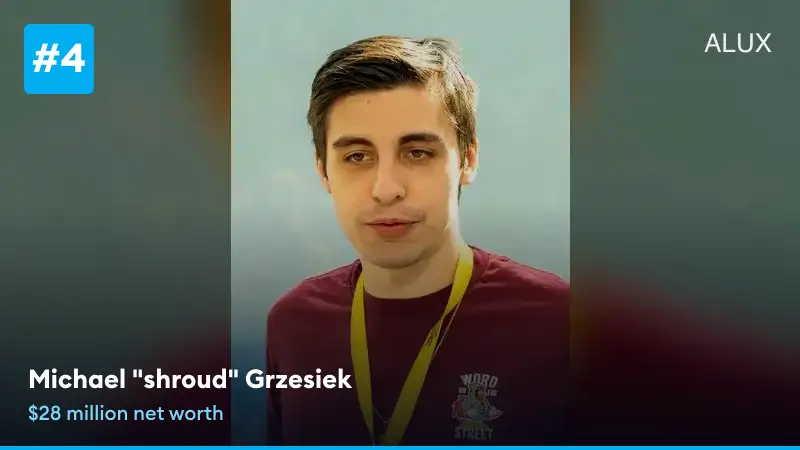
Shroud played Counter-Strike professionally for Cloud9 from 2014 to 2017, where he was famous for his aim. He then retired and became one of the most watched streamers on Twitch.
In 2019 he left Twitch for Microsoft’s Mixer in a deal reported at about $10 million. Mixer shut down the next year, and shroud returned to Twitch. He has also invested in game studios, including the team behind Spectre Divide, a shooter that closed in 2025. His Hidden Hills house in California is reported at about $9.4 million.
Streaming income, the Mixer deal and his California property drive this figure. Published estimates run from about $20 million to $40 million, and we sit toward the middle.
3. Lee “Faker” Sang-hyeok: $30 million

Faker is the closest esports has to a Michael Jordan. The South Korean has spent his entire career at T1, starting in 2013, and has won more world championships in League of Legends than any other player.
He became a part-owner of T1 in 2020, with a reported stake of about 6%, and his salary is estimated at about $5 million to $7 million a year. In July 2025 he reportedly signed an extension that keeps him at T1 until 2029. He also owns a building in Seoul, nicknamed Faker Tower, which he bought in 2020 for more than $8 million.
We count his salary since 2020, his T1 equity, the Seoul building and about $2.1 million in career prize money. Published figures range from $20 million to $40 million.
2. Tyler “Ninja” Blevins: $45 million

Long before Fortnite made him famous, Ninja was a professional Halo player, competing from 2009 for teams including Cloud9, Renegades, Team Liquid and Luminosity. The prize money was small. The skills paid later.
When Fortnite exploded in 2018, Ninja became the most famous gamer on earth, streaming with Drake and appearing on the cover of ESPN The Magazine. In 2019 Microsoft paid him to stream exclusively on Mixer, a deal reported at $20 million to $30 million, and the shutdown of the platform in 2020 came with a buyout. He has since added an Adidas shoe deal, a book and a role at GameSquare.
The Mixer money, years of streaming and sponsorship income and his property holdings make up the figure, minus taxes. Most published estimates fall between $40 million and $50 million.
1. Félix “xQc” Lengyel: $50 million
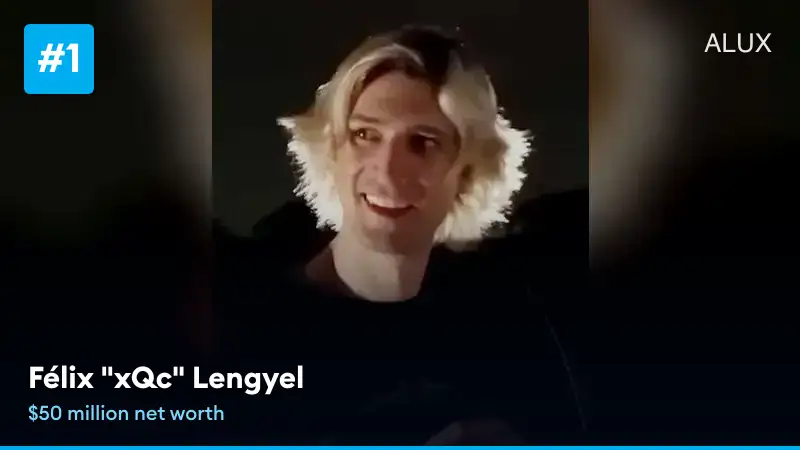
Before he was a streamer, xQc was a tank player for Team Canada at the 2017 Overwatch World Cup, where he was named MVP, and then a member of the Dallas Fuel in the first Overwatch League season in 2018. His pro career was short. His streaming career became one of the biggest ever.
The money came in June 2023, when xQc signed with Kick, a streaming site founded by the people behind an online casino. The deal was reported at $70 million guaranteed over two years, with incentives that could take it to $100 million, and it was non-exclusive, so he kept streaming on Twitch too. His Twitch channel counts around 12 million followers.
Most of our estimate is what he kept from the Kick contract after tax, plus Twitch, advertising and sponsorship income. Published estimates run from about $36 million to $70 million, and we take the middle.
What the richest esports players have in common
- The camera pays more than the trophy. The top five all earned more from streaming, salaries or business ownership than from tournaments. The players who only won prize money cluster at the bottom of the list, even though they won the biggest pots ever offered.
- Short pro careers, long second acts. xQc, Ninja, shroud and Nadeshot all spent only a few years as top competitors before leaving to stream or build companies. Their pro careers gave them credibility, and the second career gave them the money.
- Equity beats salary. Faker, N0tail and Nadeshot all own part of a team. In a business where salaries end when reflexes slow down, a stake in the company is the asset that keeps paying.
- Dota made the most millionaires from prize money. Every one of the top 20 all-time prize earners played Dota 2, thanks to The International’s crowdfunded prize pools. No other game has handed out as much money per player.
The habits that let people afford this
Short audio lessons on money, mindset and discipline, in the Alux app.
Get the Alux app →FAQ
Who is the richest esports player in the world?
Félix “xQc” Lengyel, a former Overwatch League pro, is the richest esports player with an estimated net worth of about $50 million as of November 2026.
Who has won the most prize money in esports?
Johan “N0tail” Sundstein of Denmark leads all players with about $7.2 million in career prize money, mostly from Dota 2 and OG’s two International titles.
How much is Faker worth?
We estimate Faker’s net worth at about $30 million, built from his T1 salary, his part-ownership of the team and a building he owns in Seoul.
Was Ninja a pro gamer?
Yes. Ninja played Halo professionally from 2009 for teams such as Cloud9, Renegades and Team Liquid before Fortnite made him a streaming star.
How much do you need to make this list?
About $4.8 million. That is our estimate for Anathan “ana” Pham, who won The International twice with OG.
Who is the youngest player on the list?
Bugha is the youngest. He was 16 when he won the Fortnite World Cup in 2019.
How we estimate net worth
Our estimates are based on public reporting, company valuations, and deal and earnings figures all compiled in an internal valuation model. They are approximate, and figures change over time as new information emerges.
Keep reading
- How to find a life game worth playing
- Surprising ways to make money without a traditional job
- How rich people get paid forever
Last updated: November 2026.