Steve Cohen, owner of the New York Mets, is the richest MLB owner as of November 2026, with a net worth we estimate at about $26 billion. That is more than the next three owners on this list put together. We rank the controlling owners and largest individual shareholders of Major League Baseball clubs by personal fortune, and we count only money the owners made themselves.
Several clubs belong to families who inherited their wealth, or to public companies, and a few big names are in the middle of buying or selling teams. You will find them in the special mentions after the countdown.
| Rank | Name | Net worth (USD) | Main source of wealth |
|---|---|---|---|
| 10 | John Stanton | $2.4 billion | Wireless telecom, Seattle Mariners |
| 9 | Jim Crane | $2.5 billion | Freight logistics, Houston Astros |
| 8 | Ray Davis | $3.9 billion | Energy Transfer pipelines, Texas Rangers |
| 7 | David Rubenstein | $4.3 billion | Carlyle Group, Baltimore Orioles |
| 6 | Arte Moreno | $4.7 billion | Billboard advertising, Los Angeles Angels |
| 5 | John Middleton | $4.8 billion | Cigar company sale, Philadelphia Phillies |
| 4 | Charles Johnson | $5.4 billion | Franklin Templeton, San Francisco Giants |
| 3 | John Henry | $6 billion | Fenway Sports Group, trading firm |
| 2 | Mark Walter | $10 billion | Guggenheim Partners, TWG Global, Los Angeles Dodgers |
| 1 | Steve Cohen | $26 billion | Point72 hedge fund, New York Mets |
The 10 richest owners in baseball
10. John Stanton: $2.4 billion
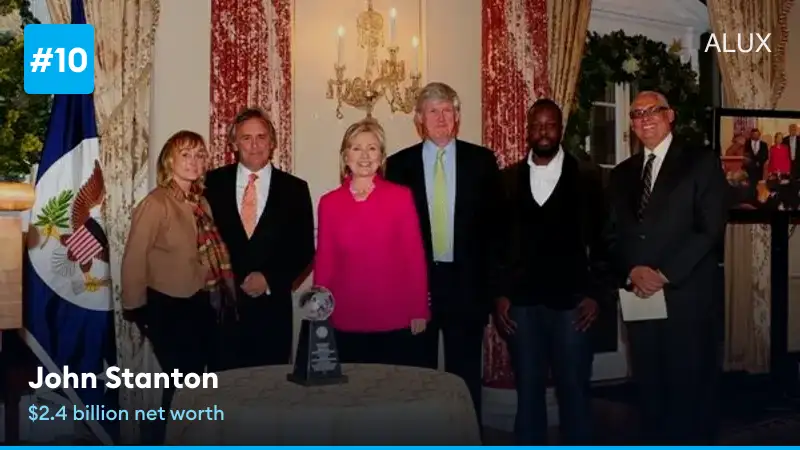
John Stanton is one of the few people who can say he helped build T-Mobile. He founded Western Wireless in 1994, spun off VoiceStream Wireless, and VoiceStream was sold to Deutsche Telekom to become T-Mobile USA. Over his career he led four major American wireless carriers.
Stanton has been managing partner of the Seattle Mariners ownership group since 2016 and is the club’s chairman. He also runs Trilogy Equity Partners, a venture firm in Bellevue, Washington, which he started in 2006.
His fortune comes almost entirely from the wireless deals, with the Mariners stake and venture holdings on top. One recent estimate has him at $2.4 billion.
9. Jim Crane: $2.5 billion
Jim Crane built a freight business from scratch, sold Eagle Global Logistics to Apollo in 2007 for more than $300 million, and then did it again. His second company, Crane Worldwide Logistics, now reports more than $900 million in annual revenue.
In 2011 his investors paid $615 million for the Houston Astros. The team has since become a perennial contender, won the World Series in 2022, and roughly quadrupled in value. Crane owns an estimated 40% of the club and the Floridian National Golf Club in Florida.
We built this from his Astros share at current team values, the logistics company valued against listed peers, and the golf club.
8. Ray Davis: $3.9 billion
In 1995 Ray Davis and Kelcy Warren co-founded Energy Transfer, which now operates about 130,000 miles of oil and gas pipelines. Davis stepped back as co-CEO in 2007 and left the board in 2022, but his shares kept him among the richest people in Texas.
In 2010 he and fellow investors paid about $600 million for the Texas Rangers, and he later became the controlling owner. In 2023 the Rangers won their first World Series, beating the Arizona Diamondbacks in five games.
Our model counts about 80 million Energy Transfer units, worth roughly $1.5 billion at November 2026 prices, and a Rangers stake we carry at about $1.2 billion. Cash distributions he kept over the years and other investments bring the total to about $3.9 billion.
7. David Rubenstein: $4.3 billion
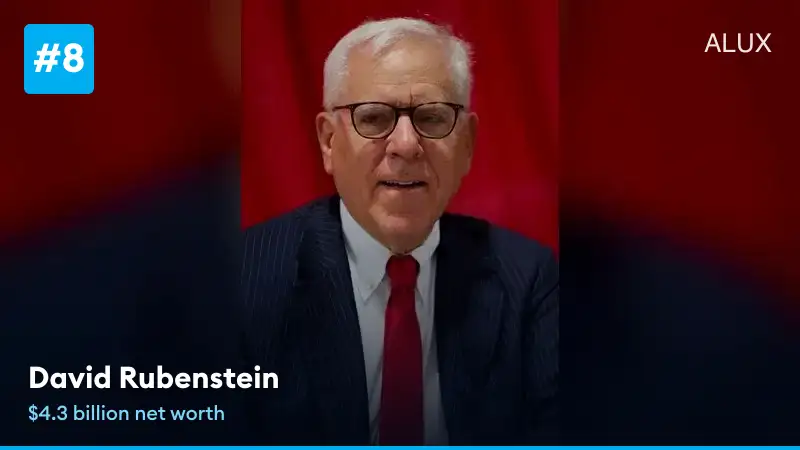
David Rubenstein worked in the Carter White House, practiced law, and in 1987 co-founded the Carlyle Group with William Conway Jr. and Daniel D’Aniello. Carlyle now manages roughly $485 billion, and Rubenstein’s job in the early years was raising money, which he did better than almost anyone in private equity.
Born in Baltimore, he put together a 2024 deal to buy the Orioles for $1.75 billion and became the club’s controlling owner. He also spends heavily on history. In 2007 he paid $24.5 million for one of four surviving original copies of the Magna Carta.
Most of the number is his Carlyle stock and his interests in the firm.s funds. His Orioles share adds a few hundred million.
6. Arte Moreno: $4.7 billion
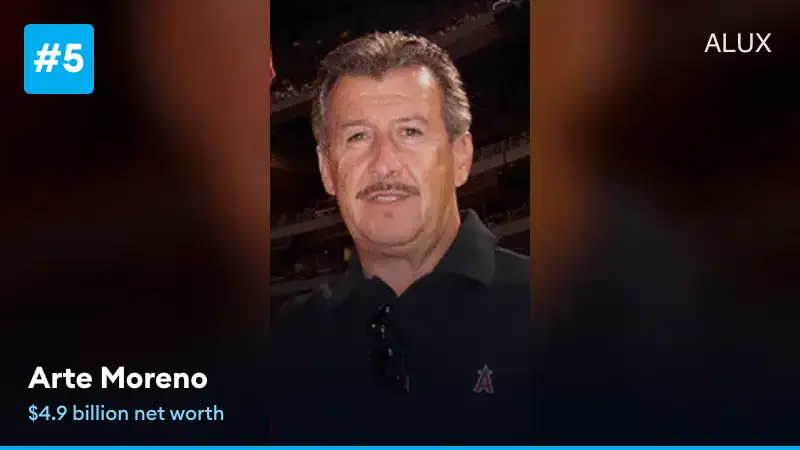
Arte Moreno was the oldest of eleven children in Tucson, served in Vietnam, and studied marketing on the GI Bill. He then made his fortune in billboards. Outdoor Systems, the company he helped run, was sold to Infinity Broadcasting in 1999 in an $8.3 billion deal.
In 2003 he bought the Los Angeles Angels for $184 million and became the first Mexican-American to own a major American sports team. On September 1, 2026, Stan Kroenke announced an agreement to buy the club from the Moreno family, at a price reported to be around $4 billion. The deal is expected to close in early 2027.
His figure counts the Angels at the reported $4 billion sale price, plus what is left of his Outdoor Systems proceeds after tax and two decades of modest growth. That gives about $4.7 billion before any tax on the Angels sale.
5. John Middleton: $4.8 billion
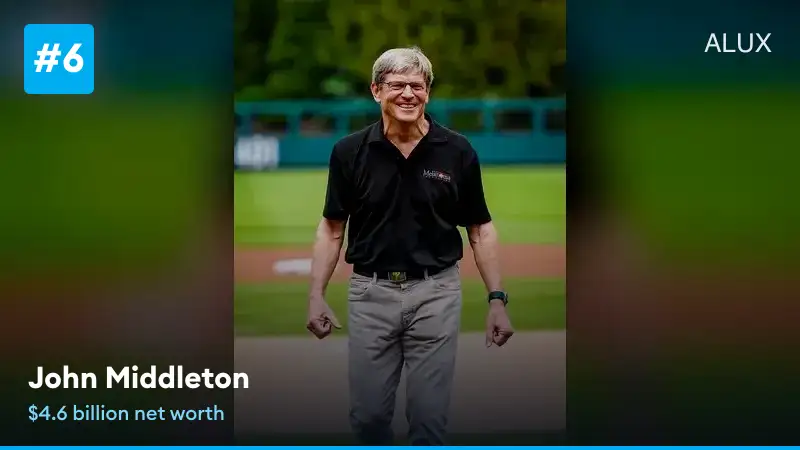
John Middleton‘s great-great-grandfather opened a Philadelphia tobacco shop in 1856. The family company later launched Black & Mild cigars in 1980, and Middleton bought out his relatives in 2003 for about $200 million. Four years later he sold the whole business to Altria for $2.9 billion in cash.
He had already been buying into the Phillies, starting with 15% for $18 million in 1994 and rising to about 48% by 2014. In 2016 the other owners made him the control person, and he has spent like a man who means it, including the 13-year, $330 million contract for Bryce Harper in 2019.
The $2.9 billion Altria sale after tax, grown at a modest rate for nearly two decades, plus about 48% of a Phillies club worth roughly $3.6 billion, gives us about $4.8 billion. Two recent estimates sit at $4.3 billion and $4.9 billion.
4. Charles Johnson: $5.4 billion
Charles Johnson became chief executive of Franklin Resources in 1957, at the age of 24. His father had started the firm ten years earlier. Johnson took it public in 1971, bought Templeton for $913 million in 1992, and turned Franklin Templeton into one of the world’s largest fund managers before handing the chairmanship to his son Greg in 2013.
In 1992 he joined the local investors who rescued the San Francisco Giants and kept them from moving to Florida. Today he is the largest shareholder, with about 26% of the team, and Greg is the club’s chairman. Johnson turned 93 in 2026.
Our model starts with about 94 million Franklin Resources shares held outside his foundation, worth roughly $3.2 billion at November 2026 prices. His 26% of the Giants adds about $1 billion, and dividends banked over decades plus other assets add about $1.2 billion, for a total near $5.4 billion. Some published estimates run higher, but they do not separate out the shares he has already given to charity.
3. John Henry: $6 billion
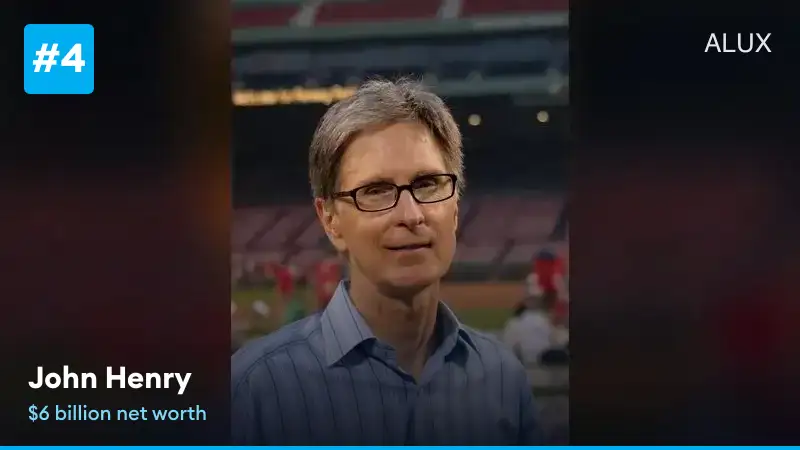
John Henry grew up around farming, learned to trade crop futures, and turned that skill into J.W. Henry & Co., a trend-following fund that made his first fortune in the 1980s. He then took that money into sports.
In 2002 he and Tom Werner bought the Boston Red Sox for $380 million. Two years later Boston won its first World Series in 86 years, and three more titles followed in 2007, 2013 and 2018. Their Fenway Sports Group has since added Liverpool, NESN, Fenway Park and other assets. In 2013 Henry also bought the Boston Globe for $70 million.
The estimate rests on his share of Fenway Sports Group at recent private valuations. Published figures range from $5.5 billion to $6.2 billion.
2. Mark Walter: $10 billion
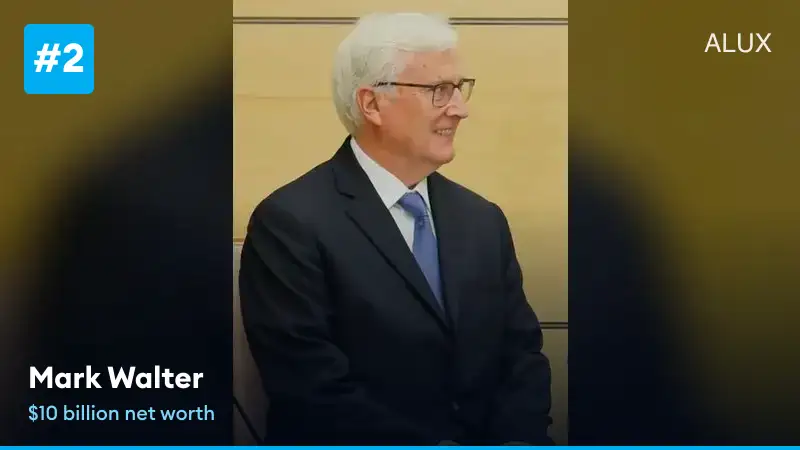
Mark Walter is a Chicago financier who rarely gives interviews. He built Guggenheim Partners into a firm managing more than $300 billion, and in 2024 co-founded TWG Global, where he owns about 21%. TWG is also behind the Cadillac Formula 1 team.
His sports portfolio is the biggest in this group. In 2012 he led the $2.15 billion purchase of the Los Angeles Dodgers, then a record for any sports team, and the club has since won multiple World Series titles. In June 2025 he agreed to buy majority control of the Los Angeles Lakers at a $10 billion valuation, and in August 2026 he agreed to sell the team to a group led by Josh Kushner and Bob Iger for $12.5 billion. He exited his stake in Chelsea in September 2026.
Estimates for Walter are far apart, from $7.3 billion to $13.3 billion, because so much of his money sits in private firms. We land at $10 billion, counting the Lakers gain.
1. Steve Cohen: $26 billion
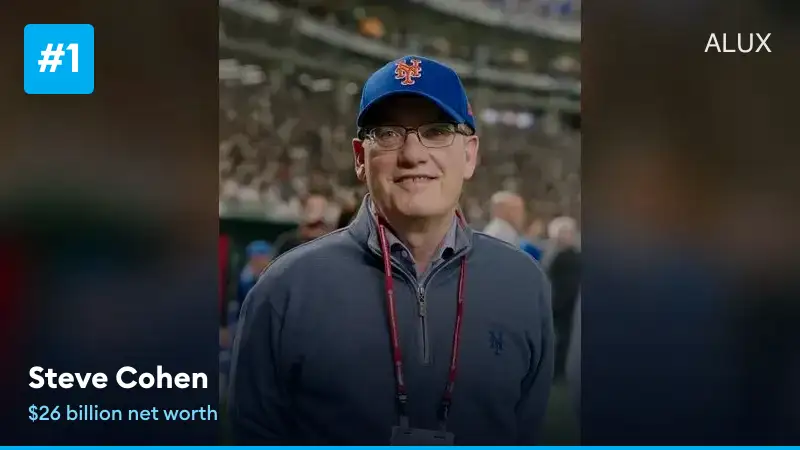
Steve Cohen is one of the most successful stock traders alive. He founded Point72 Asset Management, which manages about $58 billion, and in 2025 alone he reportedly earned around $3.4 billion, the biggest payday of any hedge fund manager.
He grew up a Mets fan on Long Island and bought the team in 2020 for $2.4 billion, the highest price ever paid for an MLB club at the time. Since then he has run the biggest payroll in baseball, topping $330 million, and in December 2024 he signed Juan Soto to a 15-year, $765 million contract, the largest in sports history. His art collection alone has been valued at around $1 billion.
Our model values his stake in Point72, his cash and stock holdings, the Mets and the art. Two recent figures put him at $25 billion and $26.7 billion.
Special mentions
- Justin Ishbia: the Shore Capital founder, worth about $6.4 billion, owns roughly 35% of the Chicago White Sox with his brother Mat and is set to take control of the team between 2029 and 2034.
- Stan Kroenke: the Rams owner, worth about $22 billion, would jump to second on this list once his purchase of the Angels closes.
- John Fisher: the Athletics owner is worth about $3.6 billion, but the fortune comes from his parents, who founded Gap.
- The Ricketts family: the Chicago Cubs owners draw their wealth from TD Ameritrade, founded by family patriarch Joe Ricketts.
What the richest MLB owners have in common
- Finance pays for most of baseball. Five of the ten made their money managing other people’s money: Cohen, Walter, Johnson, Henry and Rubenstein.
- Most of them bought late. The typical owner here made his fortune first and bought a team in his fifties or sixties. Baseball is where self-made money goes to have fun.
- Team values have outpaced their businesses. Crane’s Astros quadrupled, Moreno’s Angels went from $184 million to a reported $4 billion, and Henry’s Red Sox did even better. For several owners, the team is now their single best investment.
- Baseball has no salary cap, so money shows up on the field. Cohen and Middleton use their wealth to outbid rivals in a way an NFL owner never could.
The habits that let people afford this
Short audio lessons on money, mindset and discipline, in the Alux app.
Get the Alux app →FAQ
Who is the richest owner in Major League Baseball?
Steve Cohen, owner of the New York Mets, is the richest MLB owner with an estimated net worth of about $26 billion in November 2026.
How much did Steve Cohen pay for the Mets?
Cohen bought the Mets in 2020 for $2.4 billion, at the time the highest price ever paid for a baseball team.
Who owns the Los Angeles Dodgers?
Mark Walter leads the Dodgers’ ownership group and owns about 27% of the club. His group bought the team in 2012 for $2.15 billion.
How much is the 10th richest MLB owner worth?
John Stanton, chairman of the Seattle Mariners, is 10th with an estimated $2.4 billion.
Is Stan Kroenke buying the Angels?
Yes. Kroenke announced an agreement on September 1, 2026, to buy the Angels from Arte Moreno’s family, with the sale expected to close in early 2027.
Why do billionaires buy baseball teams?
Teams rarely come up for sale, their values have risen far faster than the stock market, and owning one brings a public profile that money alone cannot buy.
How we estimate net worth
Our estimates are based on public reporting, company valuations, and deal and earnings figures all compiled in an internal valuation model. They are approximate, and figures change over time as new information emerges.
Keep reading
- How rich people invest in stocks
- Decisions self-made billionaires made early
- How to become a self-made billionaire
Last updated: November 2026.