Steve Ballmer, owner of the Los Angeles Clippers, is the richest sports team owner in the world as of November 2026, with a net worth we estimate at about $164 billion. We ranked people who control a team in a top-tier professional league, personally or through a company or family holding they run, and whose fortune they built themselves. Inherited and royal wealth sits in Special mentions.
A team is the ultimate trophy asset: there are only so many, they rarely come up for sale, and their values have climbed faster than the stock market for two decades. Which is why the owners’ box has turned into one of the most exclusive rooms in business.
| Rank | Name | Net worth (USD) | Main source of wealth |
|---|---|---|---|
| 10 | Jerry Jones | $23 billion | Dallas Cowboys, oil and gas |
| 9 | Dan Gilbert | $24 billion | Rocket Companies |
| 8 | Steve Cohen | $26.5 billion | Point72 (hedge fund) |
| 7 | Stan Kroenke | $27.5 billion | Real estate, sports teams |
| 6 | David Tepper | $28.5 billion | Appaloosa (hedge fund) |
| 5 | Robert Pera | $30 billion | Ubiquiti |
| 4 | Mukesh Ambani | $92 billion | Reliance Industries |
| 3 | Gautam Adani | $110 billion | Adani Group |
| 2 | Bernard Arnault | $120 billion | LVMH |
| 1 | Steve Ballmer | $164 billion | Microsoft shares |
Counting down the 10 richest owners
10. Jerry Jones: $23 billion
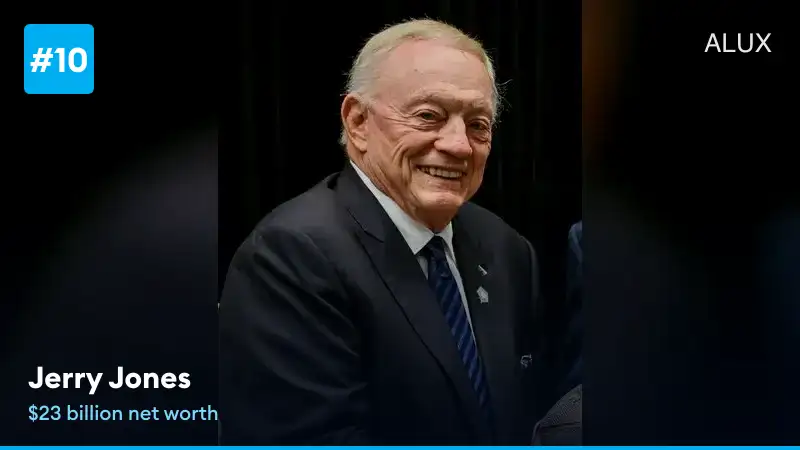
In 1989 Jerry Jones paid $150 million for the Dallas Cowboys, a team that was losing money and games in roughly equal measure. He fired coach Tom Landry on day one, made himself general manager, won three Super Bowls in the 1990s and turned the Cowboys into the most valuable sports franchise on earth, now worth about $17 billion.
The money to buy the team came from oil. Jones was a wildcatter in the 1970s who made his first million in oil and gas investments, and he still invests in wells: since a 2018 deal he has been the controlling shareholder of Comstock Resources, a Texas natural gas producer. The Cowboys owner is the only person on this list whose team is the bulk of his fortune.
About three quarters of the $23 billion is the Cowboys at today’s value, with Comstock shares and real estate making up the rest.
9. Dan Gilbert: $24 billion
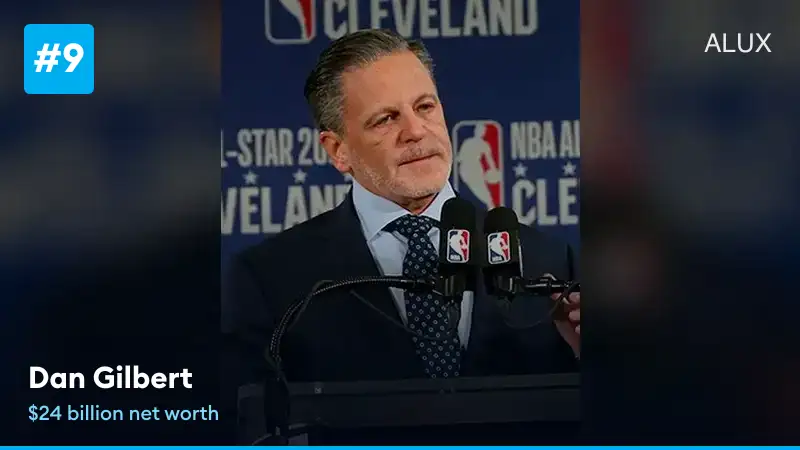
Gilbert started a mortgage company in 1985, when he was 22 and still in law school. It became Quicken Loans, then Rocket Mortgage, and today Rocket Companies is one of the biggest mortgage lenders in the U.S., originating well over $100 billion in home loans a year. It went public in August 2020, right as low interest rates set off a refinancing frenzy.
He bought the Cleveland Cavaliers in 2005 and was there for the 2016 NBA title, the city’s first major championship in 52 years. He also spent years buying up downtown Detroit buildings, where Rocket is headquartered.
His controlling stake in Rocket Companies makes up most of his $24 billion, with the Cavaliers and Detroit property on top.
8. Steve Cohen: $26.5 billion

Cohen grew up a Mets fan in Great Neck, Long Island, and bought a small stake in the team in 2012. In 2020 he took control for $2.4 billion, then the highest price ever paid for a baseball team, and has spent like a fan with a hedge fund ever since. The Mets have run some of the highest payrolls in baseball history under his ownership.
The money comes from Point72 Asset Management, the investment firm he runs with tens of billions in assets. His 2025 pay alone was estimated at about $3.4 billion. He also owns an art collection valued at around $1 billion.
Point72 equity and his own capital in its funds make up most of the $26.5 billion, with the Mets and art collection as the next-largest pieces.
7. Stan Kroenke: $27.5 billion

Nobody owns more teams. Kroenke controls the Los Angeles Rams, Denver Nuggets, Colorado Avalanche, Colorado Rapids and Arsenal of the English Premier League. He also privately built SoFi Stadium in Inglewood, the most expensive stadium ever constructed, when he moved the Rams from St. Louis back to Los Angeles.
The money behind it all is real estate. Kroenke owns about 60 million square feet of property, much of it shopping centers built next to Walmart stores, and roughly 2.7 million acres of ranches in the U.S. and Canada, enough to make him one of the biggest landowners in North America. His wife, Ann Walton Kroenke, is a Walmart heir, but his own fortune comes from his property and teams.
His $27.5 billion adds five franchises at current values to his property and ranch holdings.
6. David Tepper: $28.5 billion
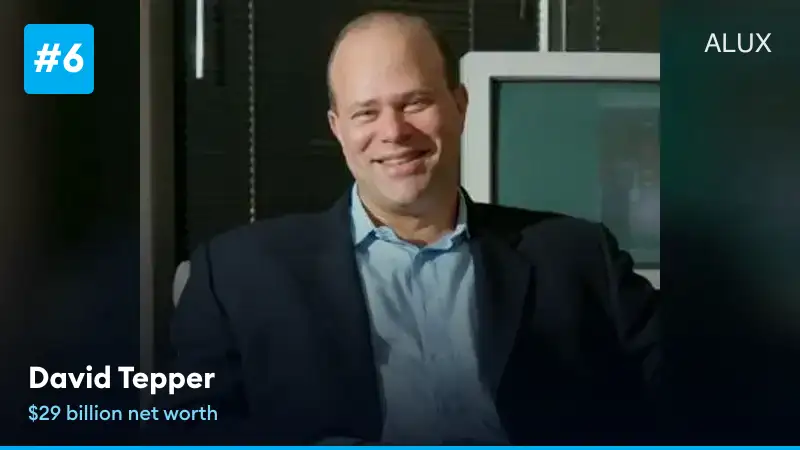
Tepper bought the Carolina Panthers in 2018 for about $2.3 billion, a record NFL price at the time, after selling his minority stake in his hometown Pittsburgh Steelers. A year later he won an MLS expansion team for Charlotte, paying a record fee of about $325 million. Charlotte FC started play in 2022 at the Panthers’ stadium.
His wealth comes from Appaloosa Management, the hedge fund he founded in 1993. Its most famous win came in early 2009, when Tepper bought bank stocks at panic prices and made about $7 billion for the fund, roughly $4 billion of it his own. The 2025 Panthers won the NFC South, ending a long playoff drought.
Appaloosa capital, most of it Tepper’s own, accounts for the bulk of this figure, with the two Charlotte teams on top.
5. Robert Pera: $30 billion
Pera is the owner fans rarely see. As an Apple engineer testing Wi-Fi gear, he noticed the devices ran far below legal power limits and figured cheap, powerful wireless equipment could reach places big telecom companies ignored. Apple passed on the idea, so in 2005 he started Ubiquiti with about $30,000 of savings and credit card debt.
Ubiquiti now sells networking gear worldwide, and Pera owns about 93% of the listed company, a rare level of control for a public firm. In 2012 he bought the Memphis Grizzlies for about $350 million, becoming the youngest controlling owner in the NBA at 34.
Estimates of his wealth range from about $30 billion to more than $55 billion depending on how Ubiquiti’s stock is priced, so we stay at the conservative end.
4. Mukesh Ambani: $92 billion
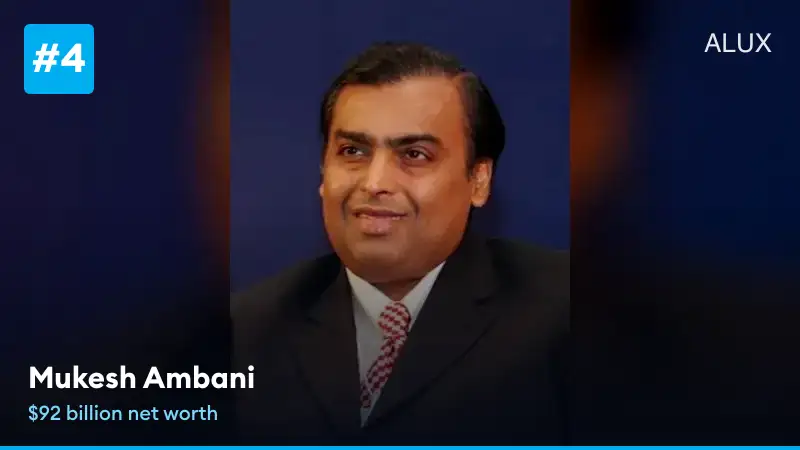
Ambani’s Reliance Industries paid $111.9 million for the Mumbai Indians in January 2008, the most expensive team in the first Indian Premier League auction. It turned into the most successful franchise in the league, with five titles between 2013 and 2020, and a brand that now spans teams in South Africa, the UAE, the U.S. and England under the MI name. His wife, Nita, and son Akash run the cricket side.
The fortune behind it is Reliance, which Ambani turned from a refining and petrochemicals company into India’s biggest telecom and retail group. Its telecom arm, Jio Platforms, listed in October 2026 with a market value of about $137 billion.
We value Ambani on his family’s roughly 50% control of Reliance, which consolidates Jio, retail and the Mumbai Indians.
3. Gautam Adani: $110 billion
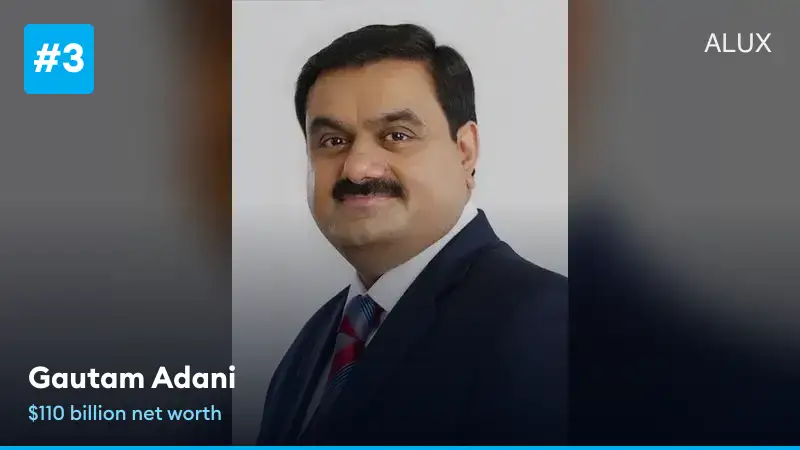
Adani dropped out of school at 16, moved to Mumbai and sorted diamonds for a living. In 1988 he started a commodities trading business in Ahmedabad, and in 1995 won the contract to run the port at Mundra in Gujarat, which grew into India’s largest private port. The Adani Group now runs eight airports, power plants, transmission lines, green energy projects and India’s second-largest cement business.
Sports came later. Adani Sportsline won the Gujarat Giants franchise in the Women’s Premier League in the January 2023 bidding, and the group runs other teams under the Giants name.
Adani’s family holds the majority of the listed group companies, and their share prices set his net worth, which we put at about $110 billion.
2. Bernard Arnault: $120 billion
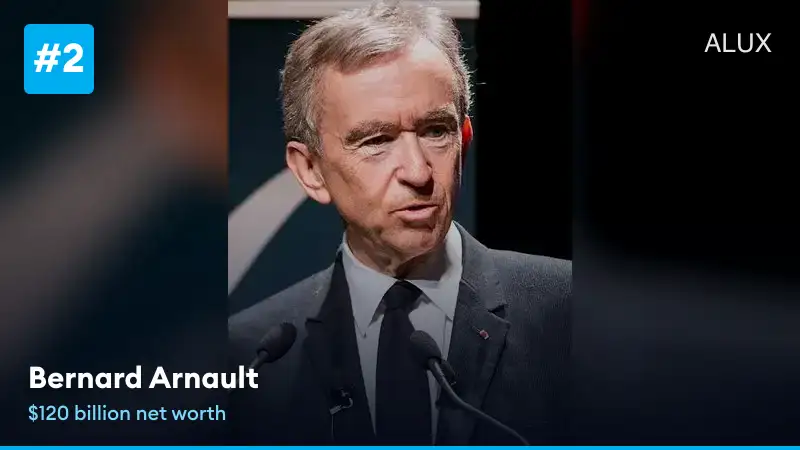
Arnault built LVMH out of a 1980s takeover of a bankrupt textile company that happened to own Christian Dior. Four decades and dozens of acquisitions later, LVMH owns Louis Vuitton, Dior, Tiffany, Moët Hennessy and some 70 more luxury houses.
In November 2024 the Arnault family’s holding company, Agache, completed its takeover of Paris FC, the city’s other football club, buying 52.4% with energy-drink maker Red Bull taking 10.6%. In May 2025 the club won promotion to France’s top division, Ligue 1, for the first time since 1979, and it now plays at the 20,000-seat Stade Jean-Bouin, a short walk from Paris Saint-Germain.
The Arnault family’s controlling stake in LVMH is almost the entire $120 billion, with Paris FC a rounding error.
1. Steve Ballmer: $164 billion

Ballmer was Microsoft’s 30th employee and its first business manager, hired by college friend Bill Gates in 1980. He ran the company as CEO from 2000 to 2014, and when he retired he owned about 4% of it. Instead of selling, he held on. Microsoft has grown roughly tenfold in value since then, and Ballmer is now the largest individual shareholder, collecting over a billion dollars a year in dividends.
In 2014 he paid $2 billion for the Los Angeles Clippers, a team now valued at about $7.5 billion. He then spent around $2 billion more building the team its own arena, the Intuit Dome in Inglewood. Through the Ballmer Group, he and his wife, Connie, fund programs that help children from poor families move up the economic ladder.
The Ballmer estimate is mostly Microsoft stock at its November 2026 price, with the Clippers and their arena counted on top.
Special mentions
- Rob Walton (about $148 billion): led the group that bought the Denver Broncos for $4.7 billion in 2022, but his money is inherited Walmart stock, and his son-in-law Greg Penner runs the team as CEO.
- Sheikh Mansour bin Zayed Al Nahyan: the Manchester City owner’s wealth is tied to the Abu Dhabi royal family and state investment funds, which makes a personal figure impossible to separate.
- Stephen Ross (about $21.5 billion): the Miami Dolphins owner and Related Companies founder just misses the top 10. In 2026 he sold small minority slices of the Dolphins, together with stakes in his Miami events, at an NFL record valuation of about $12.5 billion.
What the richest sports team owners have in common
- The team is the dessert, never the meal. Only Jerry Jones has most of his wealth in his franchise. For everyone else, the team is a few percent of the fortune.
- They bought before the boom. Ballmer’s $2 billion Clippers deal looked crazy in 2014. The team is worth nearly four times that now. Early buyers have made more from rising franchise values than from tickets or TV money.
- Ownership has gone global. Three of the top four own teams outside American leagues: two in Indian cricket and one in French football. The IPL and European soccer are now where the world’s richest people shop for trophies.
- Control matters more than profit. Kroenke, Pera and Ambani run their teams like long-term family assets. Six of the ten have held their teams for more than a decade, and none of them looks like a seller.
The habits that let people afford this
Short audio lessons on money, mindset and discipline, in the Alux app.
Get the Alux app →FAQ
Who is the richest sports team owner in the world?
Steve Ballmer, owner of the Los Angeles Clippers, is the richest sports team owner as of November 2026, with about $164 billion, mostly in Microsoft stock.
Who is the richest NFL owner?
Among owners who built their own fortunes, David Tepper of the Carolina Panthers leads at about $28.5 billion. Rob Walton’s family is richer, but its wealth is inherited and Greg Penner now controls the Denver Broncos.
Who owns the most sports teams?
Stan Kroenke controls five major teams: the Rams, Nuggets, Avalanche, Colorado Rapids and Arsenal. His company also owns smaller clubs, including the Colorado Mammoth lacrosse team.
How much does the number 10 richest team owner have?
Jerry Jones of the Dallas Cowboys ranks 10th with about $23 billion, and most of it is the Cowboys themselves.
Why is Sheikh Mansour not ranked?
The Manchester City owner’s fortune is tied to Abu Dhabi’s royal family and state investment vehicles, so we cannot separate a personal net worth built by him.
Which team owner is the youngest on the list?
Robert Pera of the Memphis Grizzlies, who bought the team in 2012 at 34, is the youngest. He was born in 1978.
How we estimate net worth
Our estimates are based on public reporting, company valuations, and deal and earnings figures all compiled in an internal valuation model. They are approximate, and figures change over time as new information emerges.
Keep reading
- The assets rich people use to preserve wealth
- What it really takes to build a $1 billion business
- Life-changing decisions self-made billionaires had to make
Last updated: November 2026.