Elon Musk is the richest tech billionaire in the world as of November 2026, with a fortune we estimate at about $850 billion. This ranking covers people whose wealth comes from founding, running or owning a large slice of a technology company: software, chips, hardware, internet platforms, space and electric cars. Heirs and investors who simply hold tech shares are left out of the ten.
The ten people on this list are worth roughly $2.7 trillion between them, and almost every dollar sits in stock. That makes the order jumpy. An October 2026 sell-off driven by fears about AI spending knocked tens of billions off several of these fortunes in a few weeks, so the numbers below are a snapshot from early November, not a carving in stone.
| Rank | Name | Net worth (USD) | Main source of wealth |
|---|---|---|---|
| 10 | Bill Gates | $121 billion | Microsoft, diversified investments |
| 9 | Larry Ellison | $155 billion | Oracle, Paramount Skydance |
| 8 | Jensen Huang | $162 billion | Nvidia |
| 7 | Steve Ballmer | $164 billion | Microsoft, LA Clippers |
| 6 | Michael Dell | $195 billion | Dell Technologies, VMware proceeds |
| 5 | Mark Zuckerberg | $210 billion | Meta Platforms |
| 4 | Sergey Brin | $218 billion | Alphabet (Google) |
| 3 | Larry Page | $237 billion | Alphabet (Google) |
| 2 | Jeff Bezos | $378 billion | Amazon, Blue Origin |
| 1 | Elon Musk | $850 billion | SpaceX, Tesla |
The countdown
10. Bill Gates: $121 billion
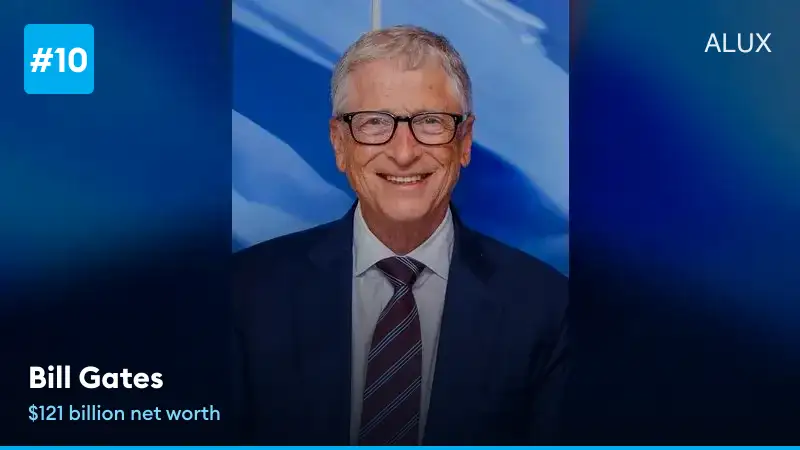
Bill Gates cofounded Microsoft with Paul Allen in 1975 and spent the next two decades putting Windows on almost every office desk on the planet. For years he was the richest person alive. He is still enormously rich, but he has also been giving it away faster than almost anyone in history: more than $63 billion has gone to his foundation so far.
His Microsoft holding is now under 1% of the company, after he moved shares into the trust that funds the foundation in 2022. What is left of his fortune sits in a spread of investments run by his private office, from farmland to rail and waste companies. In 2025 he said the foundation will spend down and close within 20 years, so expect this number to keep shrinking by design.
The figure tracks his public holdings at current prices plus a conservative value for his private investment portfolio.
9. Larry Ellison: $155 billion
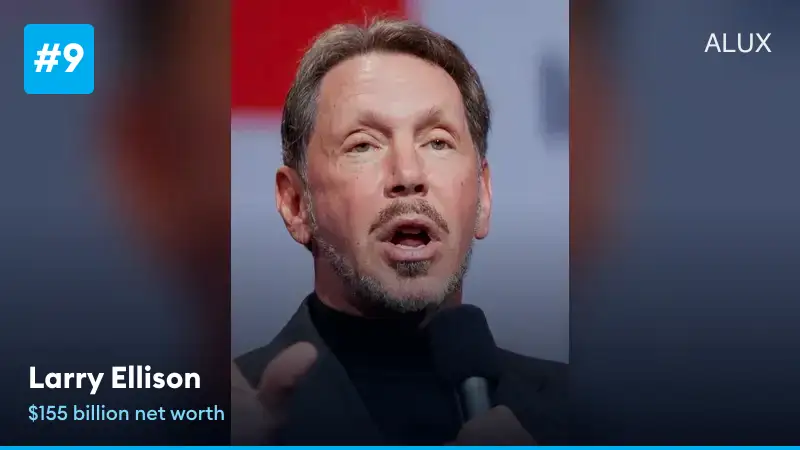
For a few days in September 2025, Larry Ellison was worth more than $400 billion. Oracle shares had jumped on huge AI cloud contracts, and the database company he started in 1977 was briefly priced like a chip maker. A year later the stock trades at roughly half that peak, which explains why the 82-year-old has slipped to the bottom of this list.
He still owns around 40% of Oracle, where he is chairman and chief technology officer. He also holds close to half of Paramount Skydance, the media group formed in August 2025 when his son David’s Skydance merged with Paramount. Off the balance sheet, he owns nearly all of the Hawaiian island of Lanai, bought for $300 million in 2012.
We value his Oracle and Paramount Skydance shares at market, which is why his rank moves more than most when Oracle reports earnings.
8. Jensen Huang: $162 billion
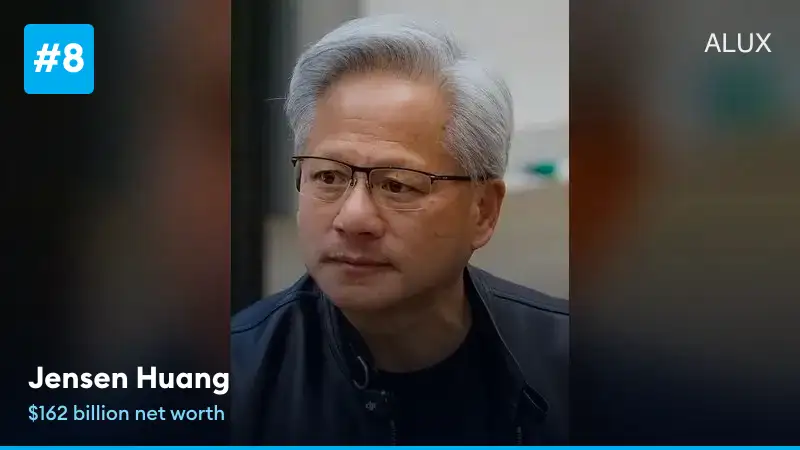
Jensen Huang cofounded Nvidia in 1993 over a meal at a Denny’s in San Jose, betting that video games would need specialised graphics chips. Gamers came first. Then researchers found those same chips were perfect for training neural networks, and Nvidia became the company every AI lab has to buy from.
Nvidia passed a $5 trillion market value in 2025. In October 2026 its stock hit a record and pushed Huang’s fortune above $200 billion for the first time, before the wider tech slide pulled it back. In September 2026 Nvidia agreed to buy the AI model platform Hugging Face for almost $13 billion. Through all of it Huang has kept roughly 4% of the company and his trademark black leather jacket.
Nearly all of this is his Nvidia stake, valued at the share price in the first week of November 2026.
7. Steve Ballmer: $164 billion
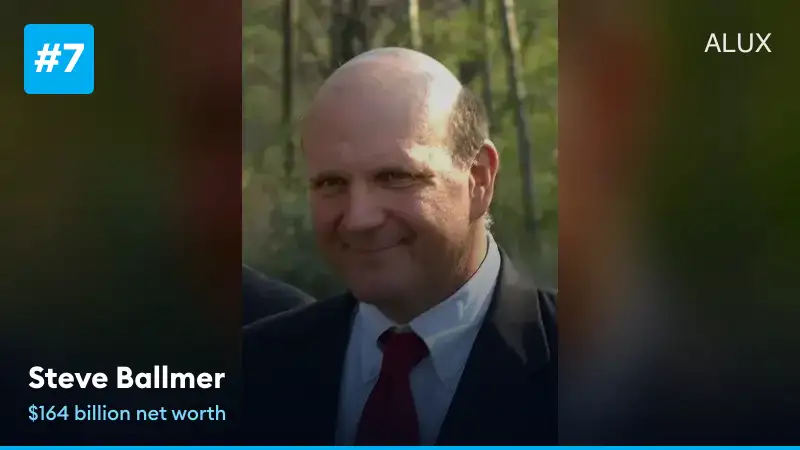
Steve Ballmer joined Microsoft in 1980 as employee number 30 and its first business manager, then ran the company as CEO from 2000 to 2014. When he retired he owned about 4% of Microsoft, and the unusual part of his story is what he did next: almost nothing with the shares. He kept them, and Microsoft’s cloud and AI business turned a big fortune into a gigantic one.
He has called himself the company’s largest individual shareholder. His other famous asset is the Los Angeles Clippers, bought for $2 billion in 2014 and now valued at around $7.5 billion, plus the Intuit Dome arena he built for them. He is the only person on this list who got this rich mostly as an employee rather than a founder.
His number is close to 4% of Microsoft at market, with the Clippers and the arena counted at recent team valuations.
6. Michael Dell: $195 billion
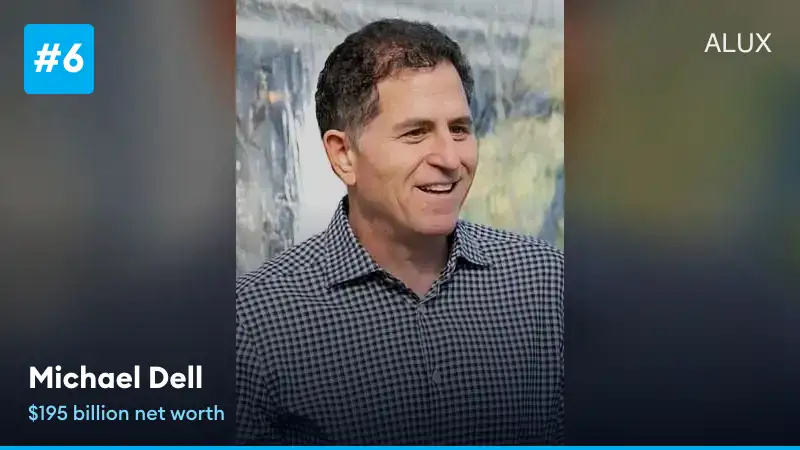
In 1984 a University of Texas freshman started selling upgraded PCs from his dorm room. Michael Dell dropped out, the company grew into the world’s biggest PC maker, and four decades later he is still its chairman and CEO. He took Dell private in 2013, bought storage giant EMC for about $60 billion in 2016 and brought the combined group back to the public market in 2018.
The VMware chapter made him richer still: Dell spun it off in 2021, and when Broadcom bought VMware for $69 billion in 2023, 39% of that went to Michael Dell. More recently the AI server boom sent Dell Technologies shares soaring, and by September 2026 he was neck and neck with Jeff Bezos for a place among the three richest people in the world. A 21% drop in Dell’s stock in October took about $40 billion off his total. Much of the rest of his money sits in his family office, DFO Management, which owns hotels and invests in corporate credit.
We combine his Dell Technologies shares at market with an estimate of the cash and investments held through DFO Management.
5. Mark Zuckerberg: $210 billion
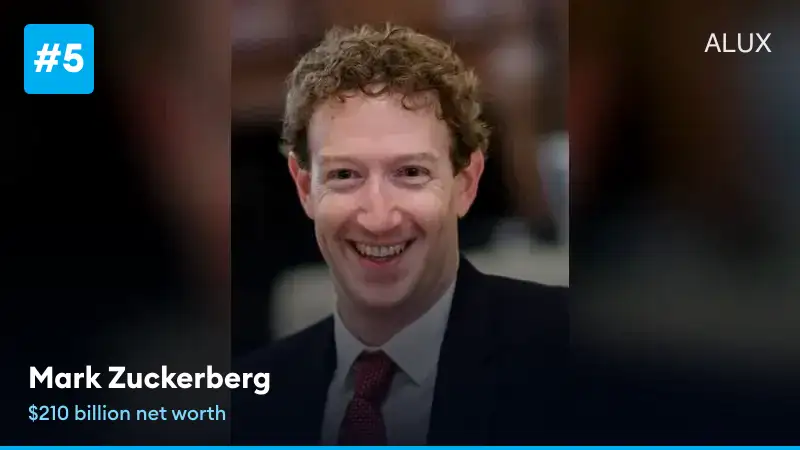
Mark Zuckerberg launched Facebook from a Harvard dorm in 2004 and took it public in 2012. Today Meta also owns Instagram and WhatsApp, which together reach several billion people a day. He has stayed in charge the whole time and controls the company through special voting shares.
His wealth rides on how investors feel about his spending. He poured billions into virtual reality and the metaverse, then even more into AI data centers and talent, at one point offering top researchers pay packages worth hundreds of millions of dollars. When the market likes the bet, his fortune climbs fast. When it worries about the bill, as it did in October 2026, his fortune falls just as quickly. He and his wife, Priscilla Chan, have pledged to give away 99% of their Meta shares over their lifetimes.
The estimate rests on his roughly 13% stake in Meta at the November 9 share price, plus cash from years of share sales.
4. Sergey Brin: $218 billion

Sergey Brin moved to the United States from Moscow at age six. At Stanford he met Larry Page, and in 1998 the two turned a research project on ranking web pages into Google. He was Alphabet’s president until 2019, and he remains a board member and, with Page, a controlling shareholder.
After stepping back for a few years, Brin returned to the office to work on Google’s Gemini AI models, a return he has framed as too exciting a moment in computer science to sit out. Alphabet’s AI progress lifted the stock through 2025 and much of 2026. Then the autumn slide arrived, and Alphabet shares fell more than 18% in a month. He has given more than $2 billion to research into Parkinson’s disease.
Our model values his Class B and Class C Alphabet shares at market and adds an estimate for cash from past sales.
3. Larry Page: $237 billion
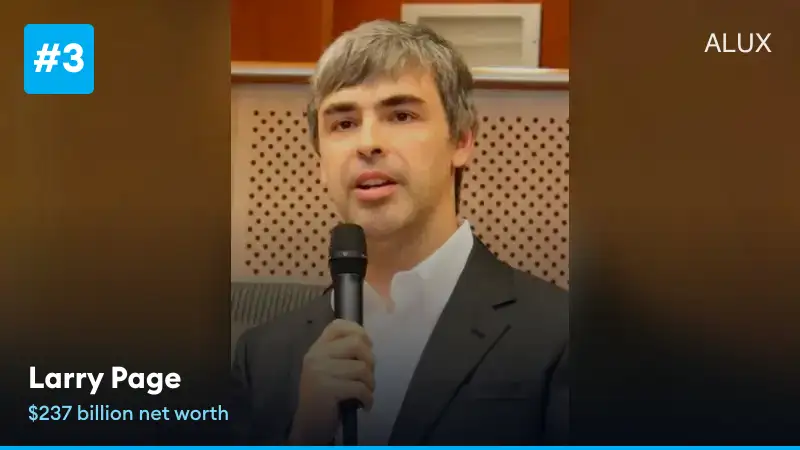
Larry Page’s PhD idea was simple to say and hard to build: rank a web page by how many other pages link to it. That idea became PageRank, then Google, then Alphabet, one of the most valuable companies ever listed. Page was Google’s first CEO, came back to the job in 2011 and handed day-to-day control to Sundar Pichai in 2019.
Page still sits on Alphabet’s board and owns a slightly bigger stake than Brin, which is why he ranks one place higher. Away from Google he has backed flying-car startups and an AI manufacturing venture. His fortune peaked above $280 billion in early autumn 2026, then lost roughly $50 billion as Alphabet fell.
The number is built from his Alphabet holdings at early November 2026 prices, which make up the overwhelming majority of what he owns.
2. Jeff Bezos: $378 billion
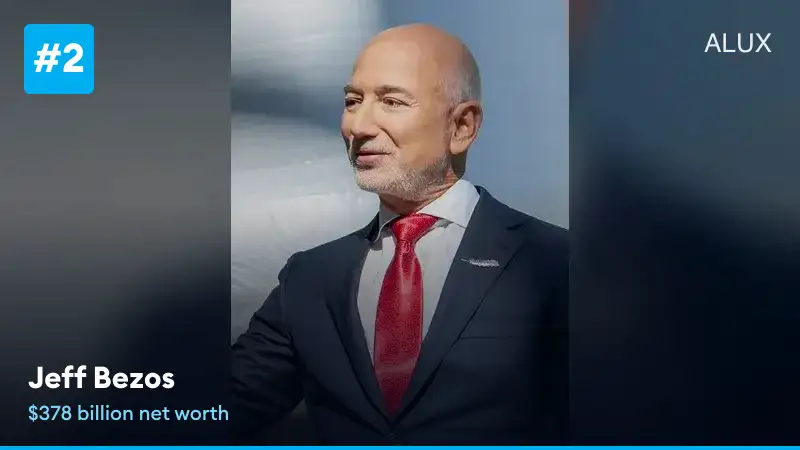
Jeff Bezos quit a hedge fund job in 1994, drove west and started selling books online from a Seattle garage. Amazon became the everything store, then the company behind AWS, the cloud service that runs a large slice of the internet. He handed the CEO job to Andy Jassy in 2021 and stayed on as executive chairman.
He owns about 8% of Amazon. The bigger change in his net worth lately is Blue Origin, his rocket company, now estimated to be worth around $130 billion now that a listed SpaceX gives investors a yardstick for rocket companies. He also owns The Washington Post and has pledged $10 billion to climate causes through the Bezos Earth Fund. He lost ground in the October 2026 tech sell-off like everyone else, yet he still sits far ahead of the pack.
His figure adds his Amazon shares at market to our estimate of his Blue Origin stake, the newspaper and his cash and property.
1. Elon Musk: $850 billion
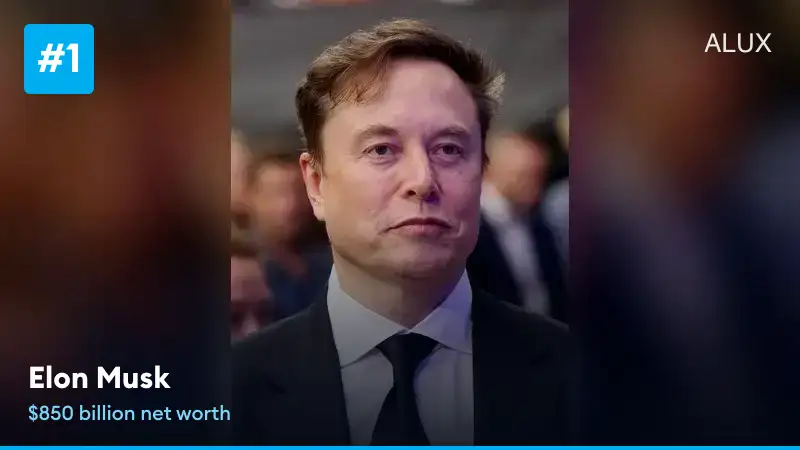
On June 12, 2026, SpaceX went public, opened at a value of nearly $2 trillion, and Elon Musk became the first person ever worth more than $1 trillion. Five months later he has fallen back below that line, and he is still more than twice as rich as anyone else alive.
The money comes from two companies. Musk owns about 38% of SpaceX, which absorbed his AI company xAI in February 2026 in a deal that valued the combined group at $1.25 trillion. Since xAI had already swallowed X, formerly Twitter, the rocket company now also owns a chatbot and a social network. He also owns nearly 11% of Tesla, with a giant performance award that could add more shares if the carmaker hits its targets. Both stocks swing hard, and a bad week can move his total by more than the entire net worth of the person in tenth place.
We value his SpaceX and Tesla stakes at market value, minus an allowance for loans secured against his shares.
Special mentions
- Zhang Yiming (about $84 billion): the ByteDance and TikTok founder is the richest tech founder outside the United States, but his fortune is a long way below Bill Gates.
- Changpeng Zhao (about $115 billion): the Binance founder is close to tenth place, but his money comes from a crypto exchange and tokens, so we rank him with the crypto billionaires.
- MacKenzie Scott: one of the richest women in the world thanks to her Amazon shares, which she received in her 2019 divorce rather than by building the company herself, and which she keeps giving away by the billions.
What the richest tech billionaires have in common
- They never sold. Ballmer, Dell, Page and Brin all had chances to cash out at a fraction of today’s prices. Holding a big stake for decades did more for them than any single deal.
- Voting control. Zuckerberg, Page, Brin and Musk all kept special voting rights or a dominant stake, which let them make long, expensive bets without being fired by impatient shareholders.
- AI decides the order. Almost every big move on this list in 2025 and 2026 came from how markets priced AI: Nvidia’s chips, Dell’s servers, Oracle’s cloud deals, Meta’s data centers, Google’s Gemini.
- They are mostly older than you think. Only Zuckerberg is under 50. The typical member of this club started their company in the 1970s, 1980s or 1990s, and the fortune took about 30 years to compound.
- Paper money moves fast. The ten richest people in the world lost around $270 billion between them in October 2026 alone. Their wealth is real, but it is priced every trading day.
The habits that let people afford this
Short audio lessons on money, mindset and discipline, in the Alux app.
Get the Alux app →FAQ
Who is the richest tech billionaire in the world?
Elon Musk, with an estimated net worth of about $850 billion in November 2026, mostly from his roughly 38% stake in SpaceX and about 11% of Tesla.
Is Elon Musk a trillionaire?
He was for a while. Musk passed $1 trillion when SpaceX went public in June 2026, but falling share prices have since pulled his fortune back to about $850 billion.
How much do you need to make the top 10 richest tech billionaires?
Right now about $120 billion. Bill Gates holds tenth place with roughly $121 billion.
Who is the richest tech billionaire who did not found a company?
Steve Ballmer. He joined Microsoft as an early employee in 1980, later became CEO and is worth about $164 billion because he held on to his shares.
Why are Larry Page and Sergey Brin worth less than earlier in 2026?
Alphabet shares fell more than 18% in October 2026 during a sell-off driven by worries about AI spending, which cut roughly $50 billion from each of their fortunes.
Who is the youngest person on the list?
Mark Zuckerberg, who is 42. Larry Page and Sergey Brin, both 53, are the next youngest, and Larry Ellison is the oldest at 82.
How we estimate net worth
Our estimates are based on public reporting, company valuations, and deal and earnings figures all compiled in an internal valuation model. They are approximate, and figures change over time as new information emerges.
Keep reading
- How the AI gold rush is making people rich
- Are we in an AI bubble?
- What happens when a company goes public
- The buy, borrow, die strategy explained
Last updated: November 2026.