Todd Graves, the Raising Cane’s founder who has sat in the guest chair on ABC’s Shark Tank, is the richest shark as of November 2026, with a fortune we estimate at about $14 billion. That puts a chicken finger salesman from Baton Rouge well ahead of the show’s most famous investor, Mark Cuban. This ranking covers everyone who has invested on the US version of Shark Tank, full-time panel members and guest sharks alike, and we label the guests so you know who sat in the chair every week.
We measure personal net worth only, valued from company stakes, business sales and property. Money a shark spends on the show is a rounding error for most of the people below.
| Rank | Name | Net worth (USD) | Main source of wealth |
|---|---|---|---|
| 10 | Robert Herjavec | $600 million | Cybersecurity companies, BRAK Systems sale |
| 9 | Kendra Scott (guest) | $720 million | Kendra Scott jewelry brand |
| 8 | Chris Sacca (guest) | $1.2 billion | Early bets on Twitter, Uber and Twilio |
| 7 | Daniel Lubetzky | $1.8 billion | Kind snack bars |
| 6 | Tony Xu (guest) | $1.9 billion | DoorDash stock |
| 5 | Richard Branson (guest) | $2.8 billion | Virgin Group |
| 4 | John Paul DeJoria (guest) | $3 billion | Paul Mitchell hair care, Patrón tequila |
| 3 | Mark Cuban | $6.5 billion | Broadcast.com sale, Dallas Mavericks |
| 2 | Michael Rubin (guest) | $11 billion | Fanatics |
| 1 | Todd Graves (guest) | $14 billion | Raising Cane’s |
The 10 richest Shark Tank sharks, ranked
10. Robert Herjavec: $600 million
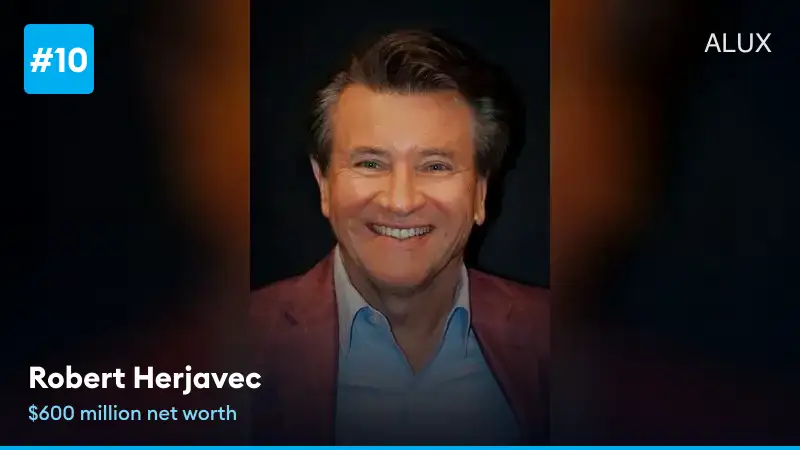
Herjavec came to Canada from the former Yugoslavia as a boy, and his family arrived with almost nothing. He got his start in tech by offering to work for free, then built BRAK Systems, an internet security firm he sold to AT&T Canada in 2000.
His next company, the Herjavec Group, grew into one of North America’s larger cybersecurity providers and later merged into Cyderes. He was on the original Shark Tank panel when the show launched in 2009, and he is the richest of the five sharks who sat on that first panel.
Our figure rests on the sales of his cybersecurity businesses, his television pay and his investments, and it puts him just ahead of Sara Blakely for the last spot.
9. Kendra Scott (guest shark): $720 million

Kendra Scott started making gemstone earrings in a spare bedroom in Austin in 2002 with about $500 of savings. Two decades later her name hangs over more than 150 stores, each with a “Color Bar” where shoppers build their own pieces, and the company sells over half a billion dollars of jewelry a year.
She has taken the guest seat in several seasons, and her pitch to founders is simple: she has done the retail grind they are about to face. In 2024 a private equity stake in her company changed hands at a valuation above $1 billion, which is the best public marker of what her majority holding is worth.
That 2024 deal anchors our figure. We apply it to her majority stake and trim for the slice owned by outside investors.
8. Chris Sacca (guest shark): $1.2 billion
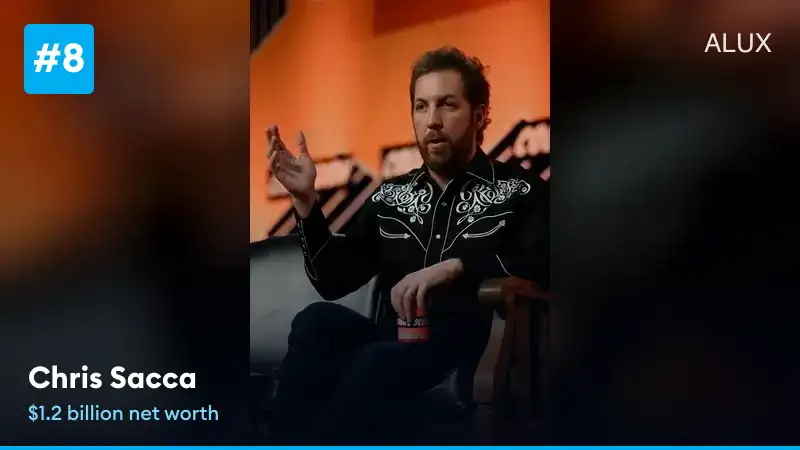
Sacca is the cowboy-shirt investor who wrote some of the earliest checks into Twitter and Uber through his firm, Lowercase Capital. Those two positions alone turned a former Google lawyer into one of the best-performing seed investors of his generation, and Twilio’s 2016 IPO added another big win.
He appeared as a guest shark during the show’s middle seasons, then retired from venture capital in 2017 to spend time with his kids, before coming back to investing with a climate fund, Lowercarbon Capital. His last widely published valuation dates to 2021, so treat this one with care.
We started from his realized gains on the Twitter, Uber and Twilio stakes and held the figure roughly flat, since he has been investing new money rather than cashing out.
7. Daniel Lubetzky: $1.8 billion
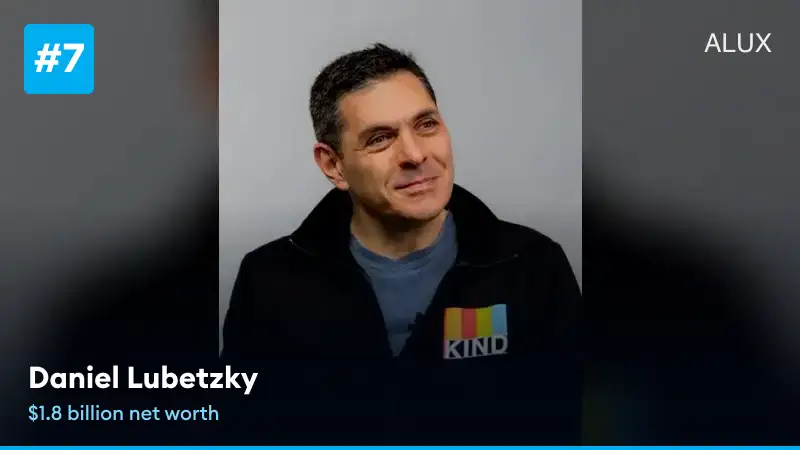
Lubetzky is the richest shark who currently sits on the full-time panel. The son of a Holocaust survivor, he founded PeaceWorks in 1994 to sell foods made by people on opposite sides of conflicts, then launched Kind in 2004 with a simple idea: snack bars where you can read every ingredient through the wrapper.
Mars bought a minority stake in 2017 and took most of the company in 2020 in a deal that reportedly valued Kind at about $5 billion. Lubetzky kept a stake until he sold the rest in 2025, and after several seasons as a guest he became a permanent shark for season 16. He also invests through Camino Partners and Equilibra Ventures.
Most of this number is the cash from his sales of Kind to Mars, after tax. We add his venture investments at cost.
6. Tony Xu (guest shark): $1.9 billion
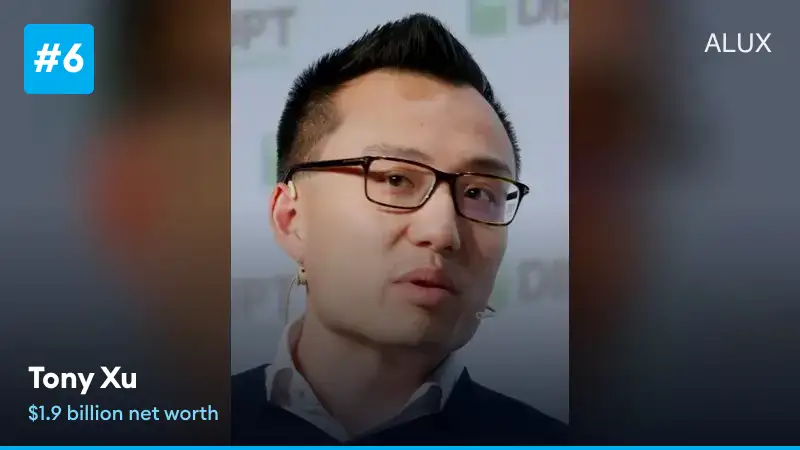
Xu moved from China to the United States at age five and washed dishes in his mother’s restaurant growing up. In 2013 he co-founded DoorDash with three Stanford classmates, and he has run it as CEO ever since, through the 2020 IPO that made him a billionaire.
He has appeared as a recurring guest shark, usually leaning toward founders with logistics or delivery angles. His wealth is almost entirely DoorDash stock, so it moves with the share price every trading day.
The figure comes from the roughly 9.9 million DoorDash shares he holds directly and through trusts at November 2026 prices, plus vested options after tax.
5. Richard Branson (guest shark): $2.8 billion
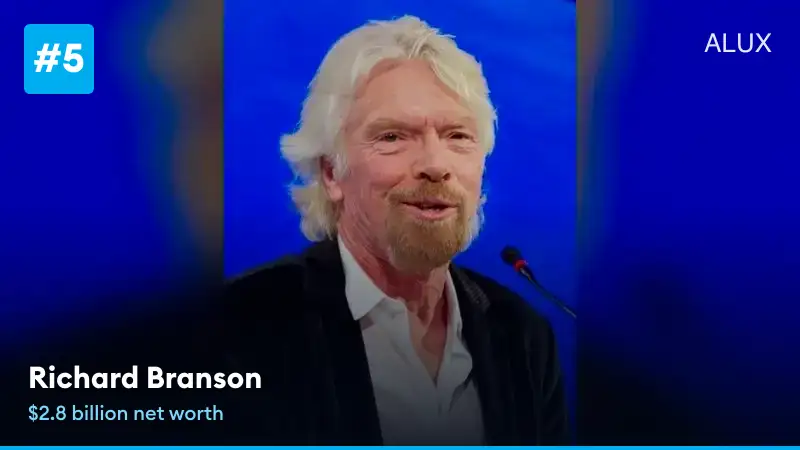
Branson started with a mail-order record business about 50 years ago and has slapped the Virgin name on airlines, trains, phones, banks, gyms and rockets since. His guest appearance on the season 9 premiere made him one of the most recognizable visiting sharks.
His fortune has had a bumpy decade. Virgin Orbit went public in 2021 at a $4 billion valuation and went bankrupt two years later, while Virgin Money sold to Nationwide in 2024 for more than $3.5 billion, a good day for Virgin shareholders. He mostly lives on Necker Island in the British Virgin Islands, which he bought in 1978 for $180,000.
We value his stakes in the private Virgin Group businesses, his remaining listed holdings and his island property, and land close to the published consensus.
4. John Paul DeJoria (guest shark): $3 billion
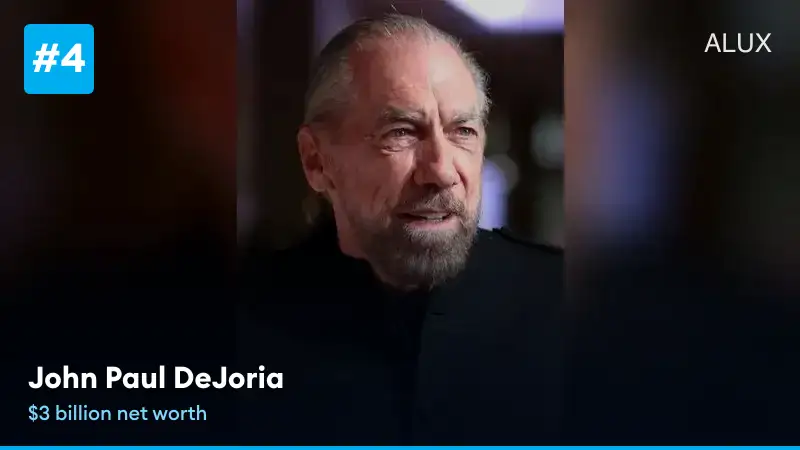
DeJoria‘s origin story is the kind Shark Tank producers dream about. He co-founded John Paul Mitchell Systems in 1980 with $700, sold shampoo out of his car and at one point lived in it. In 1989 he co-founded Patrón Spirits, turning a premium tequila into a status drink.
He was a guest shark in season 5, back when the show was still finding its format. The big payday came in 2018, when Bacardi bought Patrón for $5.1 billion. At 82 he still owns his hair care company and lives in Austin.
His share of the Patrón sale does most of the work here. Paul Mitchell, valued on hair care industry multiples, supplies the rest.
3. Mark Cuban: $6.5 billion
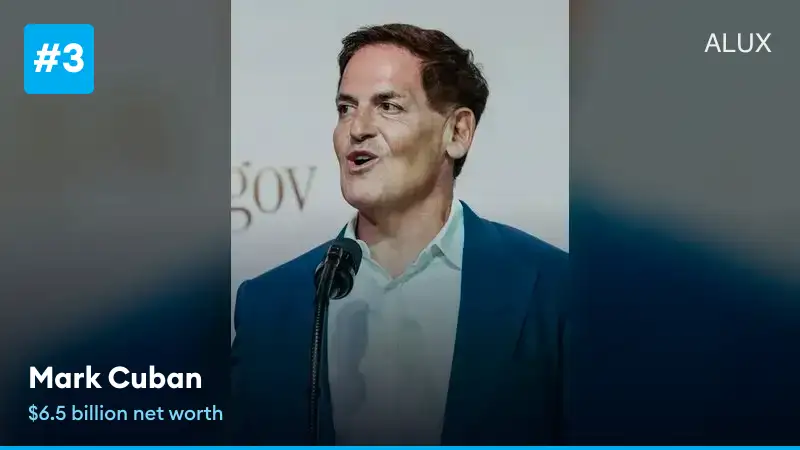
Cuban is the shark most viewers picture. He first appeared in season 2, became a regular, and stayed through season 16, when he left the show in 2025 after investing more than $20 million in Tank businesses. He has admitted that his Shark Tank portfolio never really paid off.
His real money came from the dot-com era. He and Todd Wagner sold Broadcast.com to Yahoo in 1999 for $5.7 billion in stock, and Cuban hedged his shares before the crash. In December 2023 he sold a majority of the Dallas Mavericks in a deal that valued the club at about $3.5 billion, keeping a minority stake. His newest project, Cost Plus Drugs, sells generic medicine at cost plus a small markup.
Our estimate combines the Mavericks sale proceeds, his remaining team stake, Cost Plus Drugs, his film and theater holdings and a large investment portfolio. Published figures run from $6 billion to $6.8 billion, and we sit near the middle.
2. Michael Rubin (guest shark): $11 billion
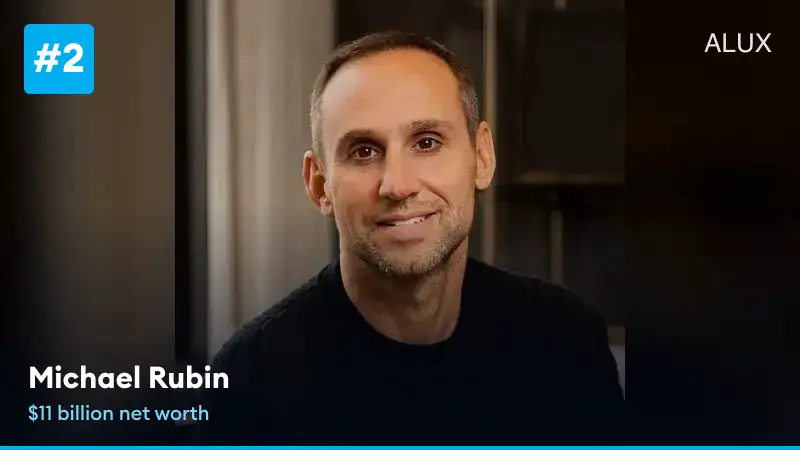
Rubin started a ski shop in his parents’ basement at 14 and had a seven-figure business before he could legally drink. He built GSI Commerce, sold it to eBay in 2011 for $2.4 billion, and as part of the deal paid $500 million for Fanatics, which he turned into the dominant seller of licensed sports merchandise, then pushed into trading cards, collectibles and sports betting.
He joined the show as a guest shark in season 15, bringing the same deal speed he is known for in sports business. Private investors valued Fanatics at $31 billion in 2022, its last widely reported price tag.
The bulk of this figure is his estimated 31% stake in Fanatics at the latest private valuation, discounted for being illiquid. Published estimates sit between about $9.6 billion and $11.7 billion.
1. Todd Graves (guest shark): $14 billion
Graves wrote a business plan for a restaurant that sold only chicken fingers, and a college professor gave it a poor grade. Banks turned him down too, so he worked at an oil refinery in California and fished for salmon in Alaska to raise money, then opened the first Raising Cane’s near Louisiana State University in 1996 with his savings and an SBA loan.
The one-item menu turned out to be a money printer. Raising Cane’s now runs nearly 1,000 restaurants with billions of dollars in yearly sales, and Graves still owns about 90% of it. ABC brought him in as a guest shark, and in the tank he made clear he wants founders who are obsessed with one thing.
Because Raising Cane’s is private, we value his stake against what investors pay for fast-growing listed restaurant chains, then apply a discount for owning a private company. Public estimates range widely, from about $10 billion at the conservative end to $22 billion. We value the chain at 20 times its estimated yearly earnings, a little below what investors pay for Chipotle, take off an assumed debt load and land at about $14 billion.
Special mentions
- Steve Tisch: the New York Giants co-owner and Oscar-winning producer was a guest shark in season 5, but most of his wealth comes from his family’s Loews fortune and the Giants stake he inherited a share of, so he sits outside the ranking.
- Peter Jones: the British investor from Dragons’ Den guested on the American show, but estimates of his fortune range too widely, from a few hundred million to over $1 billion, for us to rank him with confidence.
- Sara Blakely: the Spanx founder and guest shark sold a majority of her company to Blackstone in 2021 at a $1.2 billion valuation. After tax and a lower value for the stake she kept, we put her at about $550 million, just outside the top 10.
What the richest sharks have in common
- Guests outrank the regulars. Seven of the ten richest sharks were guests. ABC’s habit of inviting billionaires for a few episodes means the weekly panel is far from the richest group to sit in those chairs.
- Almost every fortune is one company deep. Raising Cane’s, Fanatics, Kind, Patrón, DoorDash. The biggest money came from owning a single business for a long time, not from a portfolio of small deals like the ones made on the show.
- Some were told no first. Graves got a bad grade and bank rejections, and DeJoria slept in his car. The rejected-founder story is common enough here to look like a pattern.
- Keeping control pays. Graves still owns about 90% of his chain, and Rubin has kept voting control of Fanatics through round after round of outside investment. The sharks who gave away the least equity early ended up with the biggest numbers later, which is worth remembering the next time a founder on the show turns down a royalty deal.
The habits that let people afford this
Short audio lessons on money, mindset and discipline, in the Alux app.
Get the Alux app →FAQ
Who is the richest Shark Tank shark?
Todd Graves, founder of Raising Cane’s and a guest shark, is the richest at about $14 billion as of November 2026. Among sharks who were full-time members of the panel, Mark Cuban leads at about $6.5 billion.
Who is the richest full-time shark on the current panel?
Daniel Lubetzky, the Kind founder, is the richest current full-time shark at about $1.8 billion. Mark Cuban was richer but left the show after season 16.
How much is the number 10 shark worth?
Robert Herjavec, the cybersecurity founder and original panel member, takes the 10th spot with an estimated $600 million, just ahead of Spanx founder Sara Blakely.
Is Kevin O’Leary a billionaire?
No. Kevin O’Leary’s fortune is in the hundreds of millions, with estimates ranging from about $150 million to $400 million, which keeps him well outside this top 10.
Do the sharks use their own money on Shark Tank?
Yes, the investments made on the show come from the sharks’ own pockets. Mark Cuban alone put more than $20 million into businesses he met on the show.
How many billionaires have appeared on Shark Tank?
At least eight of the people on this list have been billionaires at some point, and most of them first sat on the show as guest sharks rather than full-time panel members.
How we estimate net worth
Our estimates are based on public reporting, company valuations, and deal and earnings figures all compiled in an internal valuation model. They are approximate, and figures change over time as new information emerges.
Keep reading
- Life-changing decisions self-made billionaires had to make
- What it really takes to build a $1 billion business
- Debt vs equity: how billionaires fund their businesses
Last updated: November 2026.