Saudi Aramco is the richest oil company in the world as of November 2026, with a stock market value of about $1.69 trillion. This ranking covers publicly traded companies whose main business is finding, producing, refining or selling oil and gas, ranked by market capitalization (share price times shares outstanding) at the close on November 6, 2026. For companies, “net worth” here means market value: what investors would pay for the whole business today.
Market value is a mood ring as much as a measuring stick. Oil jumped in 2026, trading above $100 a barrel for several months after averaging under $70 the year before, and the stocks below moved with it. Fully state-owned giants with no listed shares, such as Kuwait Petroleum Corporation or Abu Dhabi National Oil Company, have no market price, so they cannot be ranked here.
| Rank | Company | Market value (USD) | Main business |
|---|---|---|---|
| 10 | BP | $115 billion | Oil, gas and Castrol lubricants (UK) |
| 9 | Petrobras | $117 billion | Deepwater oil production (Brazil) |
| 8 | CNOOC | $145 billion | Offshore oil and gas (China) |
| 7 | ConocoPhillips | $161 billion | Oil and gas production (US) |
| 6 | TotalEnergies | $195 billion | Integrated energy, LNG (France) |
| 5 | PetroChina | $245 billion | Oil, gas, refining and pipelines (China) |
| 4 | Shell | $282 billion | LNG trading, oil and gas (UK) |
| 3 | Chevron | $415 billion | Oil, gas and refining (US) |
| 2 | ExxonMobil | $677 billion | Integrated oil and gas (US) |
| 1 | Saudi Aramco | $1.69 trillion | Oil production (Saudi Arabia) |
The ranking, from 10 to 1
10. BP: $115 billion
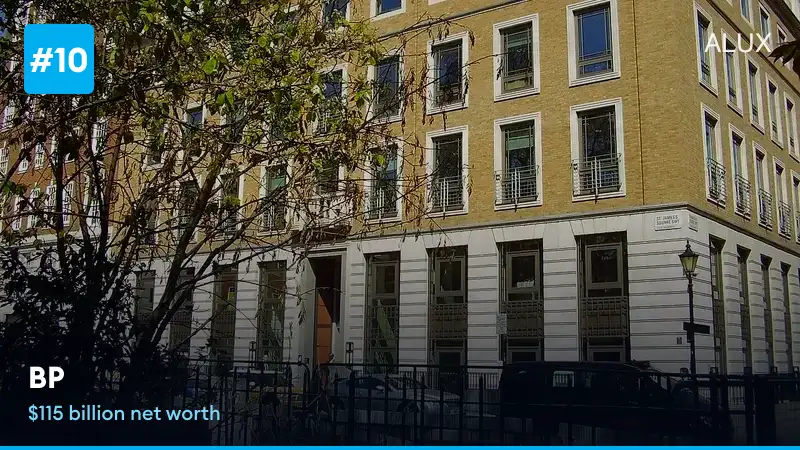
BP started life in 1909 as the Anglo-Persian Oil Company, drilling in what is now Iran, and spent most of the next century as one of the “Seven Sisters” that ran the global oil trade. For a few years in the 2020s it tried to reinvent itself as a green energy company, promising to shrink oil output and pour money into wind and solar.
Investors did not love that plan. In early 2025 BP reversed course, cut its renewables budget and pledged to grow oil and gas again, a U-turn that turned the company into one of the most watched turnaround stories in the industry. It still runs big operations in the Gulf of Mexico, the North Sea and Azerbaijan, plus the Castrol lubricants brand and thousands of filling stations.
Our figure is BP’s market capitalization of roughly $115 billion at the November 6, 2026 close, which two separate market data sets put within a billion of each other.
9. Petrobras: $117 billion

Brazil’s national oil company sits on one of the great oil finds of the century. In 2006 and 2007 Petrobras drilled through about two kilometers of salt beneath the Atlantic seabed and hit the “pre-salt” fields off Rio de Janeiro, a geological layer so rich that Brazil went from oil importer to one of the world’s top ten producers.
The Brazilian government controls the company, but its shares trade in São Paulo and New York, which lets the market put a price on it. Petrobras pumps well over two million barrels a day, almost all of it from deep water, and has become famous among income investors for large dividend payouts in good years.
Two market data sources had Petrobras between $114 billion and $119 billion on November 6, so we used about $117 billion. That keeps it a whisker ahead of BP.
8. CNOOC: $145 billion
CNOOC Limited is China’s offshore specialist. While its larger cousins dig on land, CNOOC works the Bohai Bay, the South China Sea and a growing list of foreign waters. Its best overseas bet is a 25% stake in Guyana’s Stabroek block, where it sits alongside ExxonMobil in one of the most profitable oil discoveries of the past decade.
The company is majority owned by the Chinese state through its parent, China National Offshore Oil Corporation, and trades in Hong Kong and Shanghai. It has been one of the lowest-cost producers among the big listed oil companies, which matters a lot when prices fall.
The Hong Kong market valued CNOOC at about HK$1.15 trillion on November 6, which converts to roughly $145 billion, in line with a second estimate of about $141 billion.
7. ConocoPhillips: $161 billion

ConocoPhillips is the biggest pure oil and gas producer in this ranking. It owns no refineries and no gas stations. In 2012 it spun off its refining arm as Phillips 66 and kept only the business of pulling hydrocarbons out of the ground, from the Permian Basin in Texas to Alaska’s North Slope and Norway.
The company has been buying aggressively. Its roughly $22.5 billion takeover of Marathon Oil, closed in late 2024, added more drilling land in Texas, North Dakota and Equatorial Guinea. In a year of high oil prices, a producer with no refining cushion gets the full benefit of every extra dollar per barrel, and its shares tend to move fast in both directions.
ConocoPhillips closed November 6 at $136.27 a share, for a market value of about $161 billion according to two separate data sets.
6. TotalEnergies: $195 billion
France’s largest company renamed itself from Total to TotalEnergies in 2021, a signal that it wanted to be judged on electricity and renewables as well as crude. It still makes most of its profit from oil and gas, but it has also become one of the largest liquefied natural gas players on the planet, with projects stretching from Qatar to Mozambique to the US Gulf Coast.
TotalEnergies operates in more than 120 countries and has kept a steady hand on its dividend, which is one reason its share price held up better than some rivals during the 2020 crash. Its solar and wind portfolio is now large enough to matter on its own, though investors still price the company mainly as an oil major.
Market data put TotalEnergies between about $194 billion and $196 billion at the November 6 close, which we round to $195 billion.
5. PetroChina: $245 billion
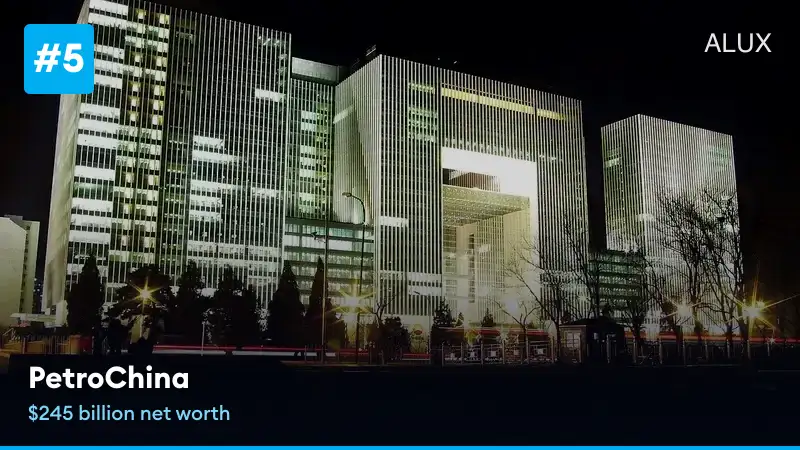
PetroChina once had a moment no company had ever had. On its Shanghai debut in November 2007, the share price jumped so far that the company was briefly valued at more than $1 trillion, the first listed company to cross that line. The price drifted back down within months, and it has never come close since.
Even so, PetroChina is a giant. It is the listed arm of China National Petroleum Corporation, pumps much of China’s domestic oil and gas, runs a huge refining and pipeline network and sells fuel through tens of thousands of service stations. It is also one of the world’s biggest companies by revenue.
The tricky part is that PetroChina has two share classes trading at different prices in Shanghai and Hong Kong. Using the Hong Kong price across all shares gives about $245 billion, which is the figure we use; a blended count that values the Shanghai shares at their higher local price would push it noticeably higher.
4. Shell: $282 billion

Shell began in 1833 as a small London shop selling antiques and seashells, which is where the name and the yellow logo come from. Its founders’ sons later shipped kerosene to Asia, merged with Royal Dutch Petroleum in 1907, and built one of the largest oil companies of the 20th century.
In 2022 the company simplified its two-country structure, dropped “Royal Dutch” from its name and moved its headquarters fully to London. Today Shell is the world’s largest trader of liquefied natural gas, a business that throws off huge profits when gas markets are tight. Under chief executive Wael Sawan it has trimmed low-return projects and pushed hard on share buybacks.
Shell’s market capitalization was close to $282 billion on November 6, with the two data sources we checked about a billion apart.
3. Chevron: $415 billion
Chevron is a direct descendant of John D. Rockefeller’s Standard Oil, which was broken up in 1911. The piece that became Chevron was Standard Oil of California, and over the following century it grew through takeovers, including Gulf Oil in 1984 and Texaco in 2001.
Its most important recent deal was the $53 billion purchase of Hess, completed in July 2025. The deal handed Chevron a 30% stake in the Stabroek block next to ExxonMobil. Chevron also runs the giant Tengiz field in Kazakhstan and a large chunk of the Permian Basin, and it moved its headquarters from California to Houston.
The November 6 close valued Chevron at about $415 billion, according to two market data sets that agreed to within a few billion.
2. ExxonMobil: $677 billion
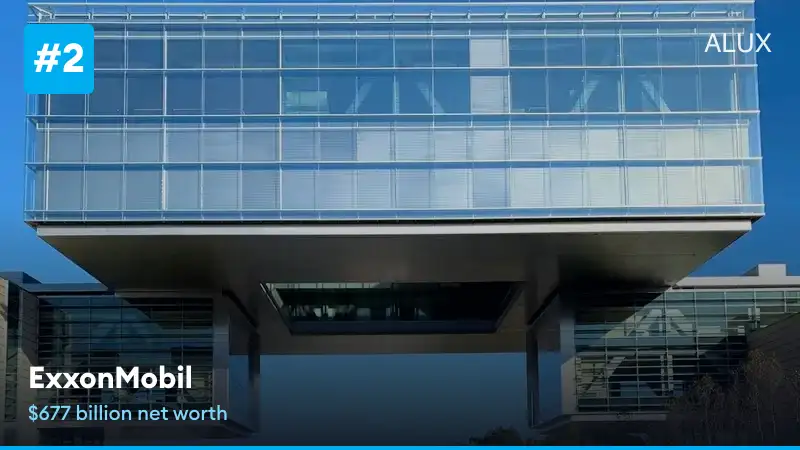
The 1999 merger of Exxon and Mobil reunited two of the largest pieces of the old Standard Oil and created the biggest Western oil company by a wide margin. It has stayed there. ExxonMobil produces more than four million barrels of oil equivalent a day, refines, makes chemicals and sells fuel on almost every continent.
Two bets carried it to new heights. The first was Guyana, where Exxon-led drilling since 2015 found more than 11 billion barrels offshore, turning one of South America’s smallest economies into an oil exporter. The second was the $59.5 billion purchase of Pioneer Natural Resources in 2024, which made Exxon the largest producer in the Permian. With crude prices well above 2025 levels, the stock hit record highs and gained roughly 40% in the first nine months of the year.
At $165.87 a share on November 6, ExxonMobil was worth about $677 billion, a figure two data providers matched almost exactly.
1. Saudi Aramco: $1.69 trillion

No oil company comes close to Aramco. It started in the 1930s as a concession run by Standard Oil of California, became fully owned by the Saudi state by 1980, and controls the kingdom’s reserves, including Ghawar, the largest conventional oil field ever found. In a normal year it pumps around one in every ten barrels the world uses.
Aramco only became a public company in December 2019, when it sold a small slice of its shares on the Riyadh exchange and raised about $25.6 billion, later topped up to roughly $29.4 billion. It was the largest initial public offering in history. In 2024 it made a net profit of about $106 billion, more than most countries’ entire tax take. The Saudi government and its Public Investment Fund still own the vast majority of the shares, so only a few percent ever trade.
The ranking uses Aramco’s market value of about $1.69 trillion in November 2026, up from roughly $1.53 trillion at the end of 2025, as reported by two separate market data sets.
Special mentions
- Sinopec: China’s largest refiner was worth about $105 billion and sits just outside the ten. It is one of the biggest companies on earth by revenue, but refining margins are thin, and investors price it accordingly.
- Enbridge: The Canadian pipeline operator, at roughly $105 billion, moves about a third of North America’s crude. We left it out because it transports oil and gas rather than producing or refining them.
- Reliance Industries: India’s biggest company runs the world’s largest refining complex at Jamnagar, but telecom and retail now make up much of its value, so it is better described as a conglomerate.
- National oil companies: Kuwait Petroleum Corporation, Abu Dhabi National Oil Company and the National Iranian Oil Company control enormous reserves but have no listed shares, so they have no market value to rank.
What the richest oil companies have in common
- They are old money with new wells. Seven of the ten trace their roots to before 1960, and three of them are pieces of Rockefeller’s Standard Oil. Yet the biggest value jumps of the past five years came from new places: Guyana, the Permian and Brazil’s pre-salt.
- Governments are the quiet shareholders. Aramco, PetroChina, CNOOC and Petrobras all have a state as their controlling owner. Four of the ten most valuable oil companies answer to a finance ministry before they answer to a fund manager.
- Size is bought as often as it is drilled. Exxon bought Pioneer, Chevron bought Hess, ConocoPhillips bought Marathon. The companies at the top have used high share prices as currency to swallow rivals.
- Gas is the new growth engine. Shell and TotalEnergies earn huge sums from liquefied natural gas, a business that barely existed at scale 30 years ago.
- The gap at the top is enormous. Aramco is worth more than the next four companies combined. Even after a strong year, ExxonMobil would need to more than double to catch it.
The habits that let people afford this
Short audio lessons on money, mindset and discipline, in the Alux app.
Get the Alux app →FAQ
What is the richest oil company in the world?
Saudi Aramco is the most valuable oil company in the world, with a market value of about $1.69 trillion in November 2026. It is also the world’s most profitable oil producer.
What is the most valuable American oil company?
ExxonMobil, worth about $677 billion in November 2026. Chevron is second among US companies at about $415 billion.
How is an oil company’s “net worth” measured in this list?
We rank companies by market capitalization, which is the share price multiplied by the number of shares. It reflects what investors are paying for the whole company, not the value of its oil in the ground or its book assets.
How much is the 10th richest oil company worth?
BP takes tenth place with a market value of about $115 billion, just behind Petrobras at about $117 billion.
Why are Kuwait’s and Abu Dhabi’s national oil companies not on the list?
They are fully owned by their governments and have no publicly traded shares, so there is no market price to rank them by. By reserves, both would be among the largest in the world.
How many Chinese oil companies are in the top 10?
Two: PetroChina at about $245 billion and CNOOC at about $145 billion. Sinopec, the third Chinese giant, sits just outside the ranking at about $105 billion.
How we estimate net worth
Our estimates are based on public reporting, company valuations, and deal and earnings figures all compiled in an internal valuation model. They are approximate, and figures change over time as new information emerges.
Keep reading
- The companies that control what you buy every day
- What economic moats are and why they protect giant companies
- How the stock market sets a company’s value
- What really happens when a company goes public
Last updated: November 2026.